Tasting Colors and Seeing Sounds
When your brain wires cross in the best way possible.
Latest Posts on Synesthesia
Fresh from the Talk Nerdy To Me® archives. Real talk, real research, real nervous systems.







What Is Synesthesia, Really?
Let's talk nerdy about how the brain processes the world. Synesthesia is a neurological phenomenon where stimulation of one sensory or cognitive pathway leads to automatic, involuntary experiences in a second pathway. The word comes from the Greek roots "syn" (together) and "aisthesis" (perception). In simpler terms, it means your senses are mingling.
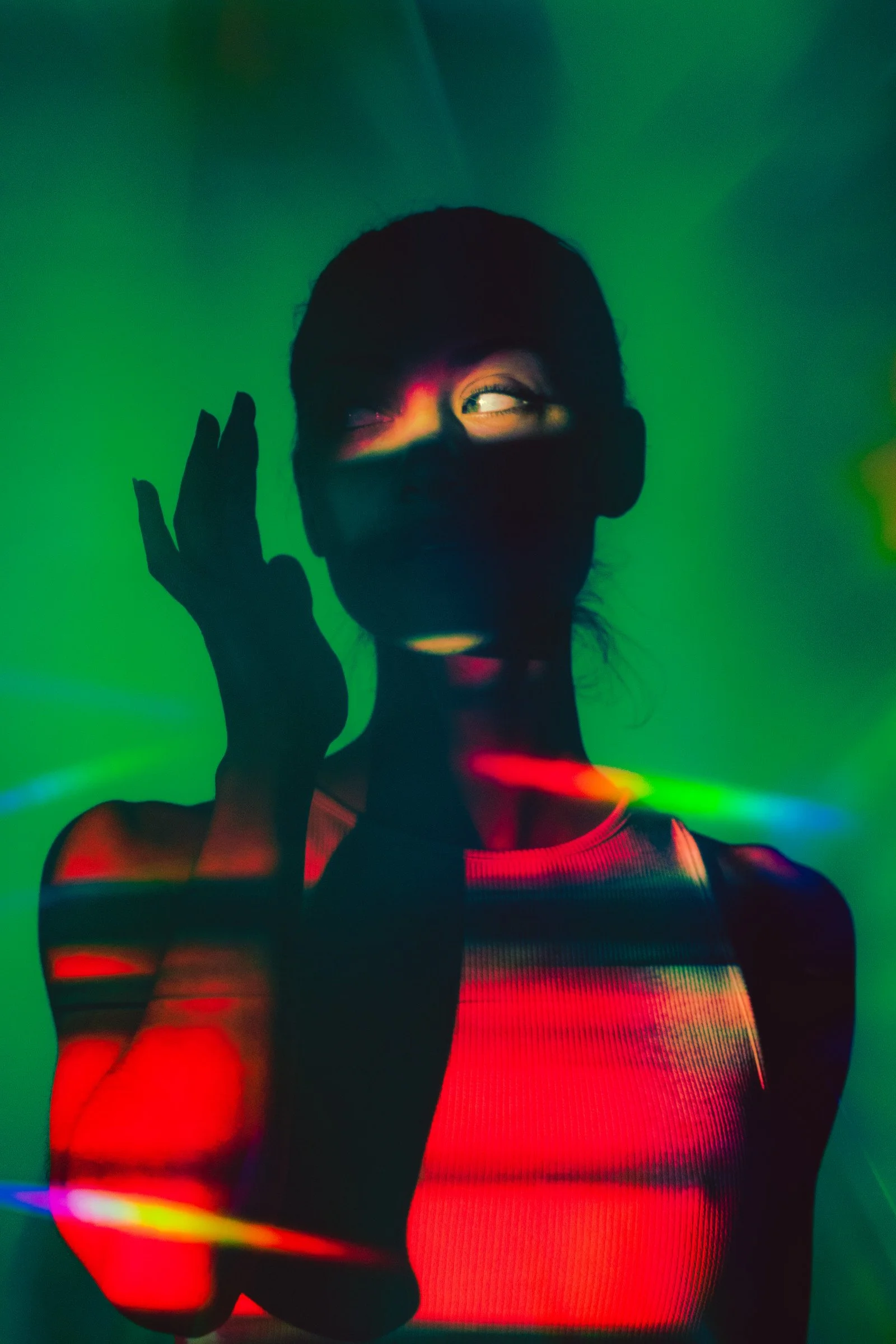
For some, letters and numbers are inherently colored (grapheme-color synesthesia). For others, hearing music produces a visual light show of shapes and colors (chromesthesia). It is not a hallucination, and it is not a metaphor. It is a very real, consistent way of experiencing reality.
"Synesthesia is a rare experience where one property of a stimulus evokes a second experience not associated with the first."
— Banissy et al., 2014 [1]Historically, synesthetes were sometimes dismissed as having overly active imaginations. Today, functional magnetic resonance imaging (fMRI) has proven that the brains of synesthetes physically light up in multiple sensory areas simultaneously. If you taste strawberries when you hear a cello, your auditory cortex and your gustatory cortex are having a very real conversation.
The Numbers: Synesthesia By The Data
While only a small percentage of the population experiences fully fledged synesthesia, researchers believe we are all born with these neural cross-connections. In most people, these connections are pruned away during early childhood development. In synesthetes, the pruning process is incomplete, leaving the cross-wiring intact.
Common Types
With over 80 documented variations, synesthesia can manifest in incredibly diverse ways. Here are some of the most well-known forms:
Letters and numbers are inherently associated with specific colors. For example, "A" might always be red.
Sounds, voices, or music trigger the visual perception of colors, shapes, and movement.
Numbers, months, or days of the week are perceived as occupying specific points in space around the person.
Observing someone else being touched produces a physical sensation of being touched in the same place.
Hearing or reading specific words triggers distinct, consistent tastes in the mouth.
Projectors actually see the color out in the world. Associators feel the color strongly in their mind's eye.
The Autism Connection
Recent studies have uncovered a fascinating overlap between synesthesia and autism. While they are distinct neurological profiles, they co-occur at rates far higher than chance would suggest. Both involve atypical sensory processing, heightened perception of details, and altered brain connectivity [4].
When autism and synesthesia co-occur, researchers have noted an increased chance of developing heightened cognitive and memory abilities, sometimes linked to savant skills [5]. For many late-diagnosed autistic individuals, recognizing their synesthesia was the first clue that their brain was wired differently.
Listen, Connect & Explore
| Resource | What It Is | Link |
|---|---|---|
| The Podcast | Listen to the Talk Nerdy To Me® Podcast | talknerdytome.com → |
| Autism Guide | The comprehensive Talk Nerdy To Me® autism resource | talknerdytome.com → |
| Jen Friel's Website | Jen's personal site and writing | jenfriel.com → |
| Contact / Press | Book Jen for interviews, speaking, or podcast features | talknerdytome.com → |
"Being born with these gifts and not knowing what they were made my life really confusing for a long time. I now get to live my quiet victory of self discovery out loud. If you've ever felt like your senses were playing by their own rules, you are not alone."
References
- Banissy, M. J., Jonas, C., & Cohen Kadosh, R. (2014). Synesthesia: an introduction. PubMed Central
- Brang, D., & Ramachandran, V. S. (2011). Survival of the Synesthesia Gene: Why Do People Hear Colors and Taste Words? PubMed Central
- van Leeuwen, T. M., et al. (2015). The Merit of Synesthesia for Consciousness Research. Frontiers in Psychology
- van Leeuwen, T. M., et al. (2021). Perceptual processing links autism and synesthesia: A co-twin control study. ScienceDirect
- van Leeuwen, T. M., et al. (2020). Synaesthesia and autism: Different developmental outcomes. Taylor & Francis