Mirror-Touch Synesthesia: When Empathy Becomes a Physical Sensation
#TalkNerdyToMe® Staff Writer
TLDR: Mirror-touch synesthesia is a rare, real perceptual experience where seeing someone else touched or hurt can trigger a localized physical sensation on your own body. It can occur alongside autism, but it does not make you universally "more empathetic." It means your brain’s system for mapping other people’s sensations sometimes becomes conscious, intense, and very difficult to ignore.
Mirror touch synesthesia is a perceptual phenomenon in which seeing another person touched, injured, or embraced can trigger a conscious physical sensation on your own body. It is more than an ordinary flinch or cringe: the sensation may feel localized, automatic, and consistent. Research suggests it involves somatosensory mirroring and self-other processing, and it can co-occur with autism.
You are watching a video. Someone shuts a car door on their fingers. Everybody in the room makes the same universal, teeth-clenching face. You might pull your own hand toward your chest. That is ordinary vicarious discomfort. Human brains are built to notice when another body is about to have a very bad Tuesday.
But then there is a different experience.
You see the car door catch their fingers, and your own knuckles light up. Not metaphorically. Not in a poetic, "I really felt that" way. You feel pressure, a sting, a sharp throb, or an uncomfortable electrical scrape in the exact place where you watched it happen. You look down at your own hand because your body has temporarily filed somebody else’s pain under urgent personal business.
That experience may be mirror-touch synesthesia.
And if you have spent years being told that you are too sensitive, too reactive, or somehow "making a big deal" out of a scene nobody else is even physically experiencing, this one is for you. Your response may not be a character flaw. It may be a perceptual phenomenon with a name, a body of research, and some legitimately fascinating neuroscience behind it.
This is also where we need to politely evict one internet myth from the building. Mirror-touch synesthesia is often described as proof that someone has "super empathy." The real science is more interesting than that, and much more useful. You can care fiercely about other people without having mirror-touch synesthesia. You can experience mirror-touch synesthesia without scoring higher on every measure of empathy. And if you are autistic, your relationship to empathy may be complicated, intense, and deeply embodied, even if the world has spent far too long misunderstanding it.
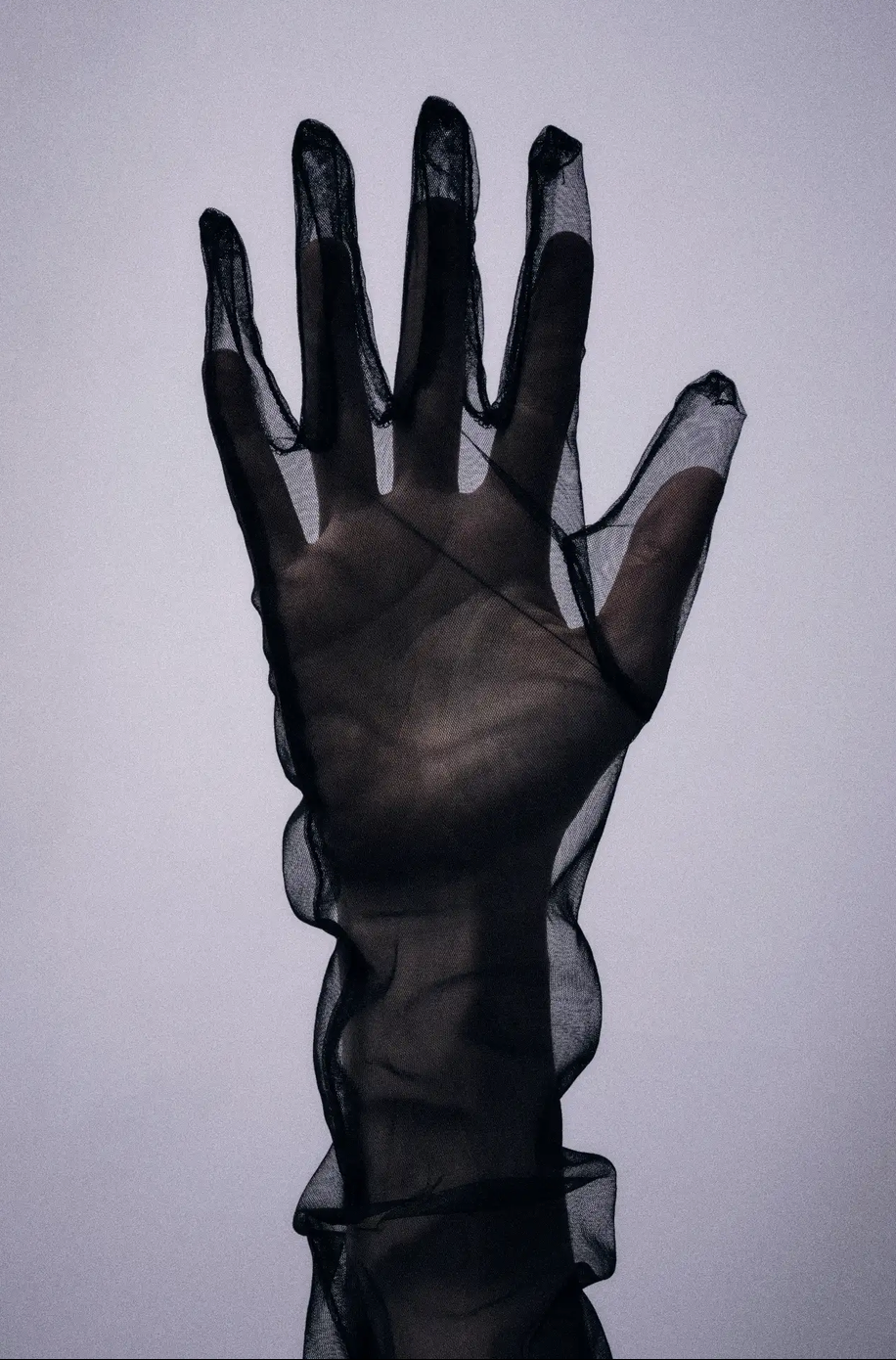
It Is Not Just a Wince: What Mirror-Touch Synesthesia Is
Synesthesia is a neurological phenomenon in which one kind of input automatically and consistently produces another experience. A sound may create a color. A word may produce a taste. A Tuesday may have the absolute audacity to be navy blue. If you want the wider taxonomy, we break down the 10 most common types of synesthesia, from colored letters to tasting words.
Mirror-touch synesthesia is the touch-specific member of that family. The trigger is visual: you see another person’s body being touched, scratched, hugged, injected, injured, or otherwise contacted. The concurrent experience is tactile: your body produces a felt sensation, often in a corresponding location. In developmental mirror-touch synesthesia, researchers describe the experience as automatic, enduring, and typically present since childhood .
That last part matters. There is a giant difference between feeling a normal sympathetic shiver while watching a horror movie and having a repeated, involuntary, physically localized sensation whenever you watch someone receive a vaccine. One is a common human reaction. The other may be a stable perceptual pattern.
Researchers are still refining how to measure mirror-touch synesthesia. That is important because a single "Do you feel other people’s pain?" social-media question is not enough to distinguish a true tactile response from a wince, a moment of disgust, anxiety, contagious itchiness, or simple compassion. In a 2018 study, researchers used videos of touch, pain, and scratching and asked participants what they experienced on their own bodies. People with higher mirror-touch scores more often described localized tactile sensations, while non-mirror-touch viewers were more likely to report broader feeling states, such as itchiness after seeing someone scratch .
In other words, this is not an empathy contest. It is a question about the form of the experience. Does your body generate a touch-like sensation? Is it specific? Does it happen automatically? Does it show up again and again, whether or not you would prefer your nervous system to stop providing surround sound?
The useful distinction: An ordinary flinch says, "Ouch, that looked painful." Mirror-touch synesthesia can say, "Ouch, my left hand now feels like it was involved in this production."
Your Brain Has a Touch Echo
Before we turn this into a story about broken boundaries or mystical human telepathy, let’s talk nerdy about what is probably happening.
Most people show some degree of vicarious sensory processing. When you watch someone get touched, brain systems involved in processing touch can activate quietly in the background. When you see someone injured, networks related to pain and emotional salience can respond. This does not mean everyone literally feels another person’s experience. Usually, these body-based simulations stay below conscious awareness, where they can help you understand that another person is hurt without making every trip to the emergency room feel like a group project .
Mirror-touch synesthesia may occur when that visual-to-tactile mapping becomes consciously noticeable. The most careful explanations point to differences in the somatosensory mirroring system, which includes regions involved in bodily sensation, alongside differences in the brain’s ability to keep track of self versus other .
Yes, people often use the phrase "hyperactive mirror neurons." It is punchy. It fits on an infographic. It also skips several floors of nuance.
Mirror neurons are one small piece of a much larger research conversation about how brains represent observed actions and sensations. The evidence for mirror-touch synesthesia is not a simple story where one set of neurons is "too empathetic." Researchers have investigated heightened or differently regulated activity in primary and secondary somatosensory cortex, as well as systems involved in self-other distinction. The anterior insula and temporoparietal junction are among the brain areas researchers have discussed because they help us map bodily experience, perspective, and the difference between my body and that body over there .
Think of the ordinary brain as having a very sensible volume knob. It notices another person being touched, runs a quick simulation, and keeps the output low enough that you can remain in your own body. A mirror-touch brain may have a louder channel, a different gate, or a self-other border that is temporarily more permeable when it sees touch. It is not that your brain has no boundaries. It is that, in particular moments, the boundary control room is receiving an unexpected number of calls.
This is also why mirror-touch synesthesia should not be confused with a hallucination. The person experiencing it generally knows that their own body was not literally touched. The sensation feels real, but they recognize its source was watching something happen to someone else. Synesthesia is a difference in perception, not a failure to understand reality.
Mirror, Anatomical, and the Body Map
Mirror-touch synesthesia does not look exactly the same in every body. Researchers describe at least two main spatial patterns . In the more common mirrored pattern, watching someone touched on their left side produces a sensation on your right side, as if you were looking at them in a mirror. In the less common anatomical pattern, seeing touch on their left side produces a sensation on your own left side.

Neither pattern is "more real" or more dramatic. They are simply different ways the brain can use another person’s body as a visual map for your own. And the sensation is not limited to a dramatic injury scene. A hug may create pressure across your shoulders. Watching a facial treatment online may make your own cheek tingle. Seeing an injection may produce a pinch in your own arm. If you are now regretting every medical show you have ever watched, your nervous system would like a word.
The object question gets especially interesting. Early descriptions emphasized that mirror-touch experiences happened when participants observed humans being touched. Later work found that some people also reported sensations while viewing objects being touched . This is one reason the research is still alive and kicking. The phenomenon is not one neat, universal checkbox. It appears to vary by trigger, by person, by sensory context, and perhaps by how the brain is representing the thing being viewed.
Mirror-Touch Synesthesia and Autism: The Empathy Myth Needs an Update

Let’s say this clearly: autistic people are not empathy-less robots. Never were. The stereotype survives because people keep confusing differences in social communication, facial-expression interpretation, or spontaneous script-following with an absence of care. Those are not the same thing. Not even remotely.
The relationship between autism and mirror-touch synesthesia matters because it punctures the lazy idea that an autistic person could not possibly have an intense, body-based response to what happens to another person. In a 2016 study of people recruited for mirror-touch synesthesia research, 30% of the 135 mirror-touch participants reported an autism spectrum condition, and the mirror-touch group showed higher autistic-trait scores than controls . That is not a population prevalence estimate. It does not mean 30% of all people with mirror-touch synesthesia are autistic, or that 30% of autistic people have mirror-touch synesthesia. It means co-occurrence is possible, important, and very much worth studying.
The broader autism and synesthesia connection is also well supported. Synesthesia occurs more frequently in autistic people than in the general population, and researchers are investigating overlapping biology such as sensory sensitivity, neural connectivity, and genetics . Mirror-touch synesthesia belongs in that conversation, but it should not be used as a diagnostic shortcut. It is one possible experience in a very large neurodivergent universe.
Where the empathy myth gets complicated is the evidence itself. The earliest small study associated mirror-touch synesthesia with higher emotional reactivity . Then a larger 2016 study found no significant advantage in overall empathy, cognitive empathy, or emotional-responsivity measures when comparing selected mirror-touch, grapheme-color, and non-synesthetic groups . A 2018 study found links with emotional empathy and facial-expression recognition, but not with every empathy measure .
That is not science "contradicting itself" so much as science refusing to flatten empathy into one score. Empathy includes multiple capacities. There is affective resonance, or sharing someone’s emotional state. There is cognitive empathy, or figuring out what another person may be thinking. There is compassion, care, perspective-taking, emotion regulation, and knowing whether that pain is yours or theirs when your body is shouting over the meeting.
Mirror-touch synesthesia may change the sensory part of that equation without turning you into an all-knowing emotional oracle. You can feel another person’s observed pain in your own body and still need explicit words to understand what they are feeling. You can also process facial expressions differently and care so deeply that you shut down. If you have ever wondered why social scenes can feel overwhelming even when you are trying your absolute best to connect, our guide to why neurodivergent people miss social cues gives that experience the nuance it deserves.
When Empathy Becomes Sensory Overload
For many people, mirror-touch synesthesia is interesting, occasionally inconvenient, and woven into daily life. For others, it can make the visual world feel like an open-plan office where every body is sending you physical notifications you never agreed to receive.
A crowded train can become a cascade of shoulders bumping, backpacks scraping, kids tugging sleeves, and people rubbing their temples. A medical drama can require subtitles, a blanket, and the immediate removal of the remote from your own trembling hand. Doomscrolling through video after video of injuries, violence, or distress can leave you feeling physically wrung out even though you never left the couch.
This does not mean that every instance of overwhelm is mirror-touch synesthesia. Many autistic and ADHD people already have heightened sensory sensitivity. A visually intense or emotionally loaded environment can be difficult even without a synesthetic tactile concurrent. If your nervous system already processes fluorescent lighting, overlapping conversations, and shirt tags as personal insults, adding perceived touch to the queue can make the load heavier. That is the same sensory-overload multiplier we discuss in our post on sensory disorder in adults.
The key is not to convince yourself that you are fragile. The key is to notice the math. Your system may be processing a source of visual information, an inferred social meaning, an emotional response, and a physical sensation at the same time. Of course you are tired. You are operating a multi-sensory group chat with no mute button.
And when that load remains high for too long, it can feed the exhaustion, reduced capacity, and withdrawal associated with autistic burnout versus depression. You do not need to earn rest by proving your experience is dramatic enough. You only need to notice that your nervous system is asking for less input.
How to Tell if It Might Be Mirror-Touch, Not Just Empathy

No blog post can diagnose mirror-touch synesthesia, and the research does not support a five-question online verdict. But curiosity can be useful, especially when it replaces shame with pattern recognition.
Start with consistency. Do similar observed experiences create similar bodily responses over time? If someone is touched on the cheek, do you repeatedly notice a sensation in your own face? Or is the response only a general wince when the video is particularly graphic? Mirror-touch experiences are typically described as involuntary and relatively stable, not something you have to imagine into existence .
Next, notice localization. You may not experience every sensation as a perfect one-to-one map, but does it show up somewhere physically specific? A hug across your shoulders. A needle in your upper arm. A tap on the hand. Research screening tools distinguish reported tactile sensations from broader emotional reactions, discomfort, or contagious itchiness for precisely this reason .
Finally, notice impact without turning your life into a surveillance operation. Does watching certain content leave you physically activated? Do you avoid medical scenes, injury videos, or high-contact environments because your body reacts before your thoughts can catch up? Information is useful. Hypervigilance is not. You are gathering clues about what helps your nervous system, not trying to win a prize for having the most elaborate brain.
If a sensory experience is new, sudden, frightening, associated with a neurological injury or health change, or significantly disrupts daily life, it is reasonable to speak with a qualified clinician. Developmental mirror-touch synesthesia is commonly described as longstanding. New symptoms deserve a real medical conversation, not a late-night algorithm and a comment section full of strangers with candle emojis.
Protecting Your Nervous System Without Shrinking Your Heart
The goal is not to become less caring. It is to stop treating your boundaries as evidence that you do not care enough.
If visual content sets off a tactile echo, give yourself permission to curate it. You can skip graphic scenes, look away during injury footage, read a plot summary instead of watching a medical episode, or choose audio-only coverage when the visuals are too much. This is not denial. It is accessible information design for your own brain.
You can also build recovery space around high-input situations. After a crowded event, a difficult conversation, or a stream of distressing news, move toward sensory conditions that help your system settle: predictable lighting, comfortable pressure, quiet, familiar textures, hydration, food, movement, or time alone. The right choice is not the most aesthetically impressive self-care routine. It is the thing that helps you return to your own body.
Language can help, too. If you are with someone you trust, you might say, "I am not upset with you. I just need a minute after watching that," or, "I can feel very physically affected by seeing injuries, so I am going to step out for this part." You do not owe everyone a neuroscience lecture. A simple boundary is already a complete sentence.
And please remember this: physical resonance is not a contract to absorb every sensation you witness. Caring about another person does not require unlimited access to your nervous system. You are allowed to scroll away. You are allowed to leave the room. You are allowed to say, "I cannot watch this right now," without making your compassion any less real.
Your Experience Is Real, Your Boundaries Are Allowed
Mirror-touch synesthesia is a reminder that the line between "my body" and "the world I am watching" can be more dynamic than most people realize. For some brains, seeing touch does not stop at the eyes. It arrives at the skin.
That can be confusing. It can be beautiful. It can make a tender moment feel even more tender and a painful image feel like your nervous system accidentally joined the stunt team. It can coexist with autism. It can coexist with difficulty reading a vague social cue. It can coexist with a huge heart, a complicated heart, a tired heart, or a heart that needs a quieter room.
You do not have to use a sensational label to validate your sensitivity. And you do not have to minimize a real, recurring physical experience just because other people cannot see it.
Your empathy is not broken. It just has a body.
