The 10 Most Common Types of Synesthesia (From Colored Letters to Tasting Words)
#TalkNerdyToMe® Staff Writer
TLDR: Synesthesia is a neurological phenomenon where stimulating one sense automatically triggers another. About 4.4% of the population has it, but autistic people are three times more likely to experience it. Here are the 10 most common types, from seeing colored letters to physically feeling someone else's pain.
Have you ever looked at the number 8 and just known that it is dark blue? Have you ever listened to a cello and watched a wave of deep purple wash across your vision? Or maybe you have heard a specific word and suddenly tasted metallic copper in the back of your throat.
If any of this sounds familiar, you are not hallucinating. You are experiencing synesthesia.

Synesthesia is a neurological phenomenon where your brain routes sensory information through multiple, unrelated pathways at the exact same time . The word itself comes from the Greek words syn (together) and aisthesis (perception). It literally means "joined perception."
For a long time, science treated synesthesia as a rare, quirky anomaly. But recent research has completely changed the narrative. We now know that about 4.4% of the general population has some form of synesthesia .
But here is the statistic that matters most to us: Autistic individuals are nearly three times as likely to have synesthesia compared to neurotypical people .
If you have an autistic or ADHD brain, your neural pathways are already wired for hyper-connectivity. Your brain does not just process sensory input; it amplifies it, cross-references it, and sometimes, it blends it together entirely. (We dive deep into the science of this in our post on The Autism and Synesthesia Connection: Why Neurodivergent Brains Cross Wires.)
There are over 80 documented forms of synesthesia . Some are incredibly rare, while others are so common that people go their entire lives assuming everyone else experiences the world exactly the same way.
Here are the 10 most common types of synesthesia, ranked from the most prevalent to the most rare and fascinating.
1. Grapheme-Color Synesthesia (Colored Letters and Numbers)
What it is: Seeing specific letters or numbers as inherently having a specific color.
This is the undisputed heavyweight champion of synesthesia. It is the most common type by a massive margin, accounting for the majority of all synesthetic experiences .
If you have grapheme-color synesthesia, the letter "A" might always be red. The number "4" might always be green. This is not a metaphor or a memory trick. When you look at a page of black text, your brain automatically overlays those specific colors onto the characters.
There are two ways this happens. "Projectors" actually see the color physically projected onto the page in front of them. "Associators" see the color vividly in their mind's eye.
The Neurodivergent Connection: Many neurodivergent people use this type of synesthesia as an accidental superpower for memorizing phone numbers, spelling complex words, or organizing data. If you have ever felt like a spreadsheet was "visually loud" because the numbers were clashing colors, this is why.
2. Chromesthesia (Sound-to-Color Synesthesia)
What it is: Hearing sounds, music, or voices and simultaneously seeing colors, shapes, or movement.
Chromesthesia is the second most common type of synesthesia . When a door slams, you might see a jagged flash of red. When a violin plays, you might see smooth, undulating waves of gold.
For many people with chromesthesia, the visual experience is directly tied to the pitch, volume, and timbre of the sound. High-pitched sounds often trigger bright, sharp colors, while low-pitched sounds trigger dark, muted colors.
The Neurodivergent Connection: This type of synesthesia is heavily overrepresented among musicians and artists (think Billie Eilish, Pharrell Williams, and Duke Ellington). However, for autistic individuals with Sensory Processing Disorder, chromesthesia can turn a noisy grocery store into a blinding, chaotic laser light show. It is not just loud; it is visually overwhelming.
3. Spatial Sequence Synesthesia (Time and Space Mapping)
What it is: Visualizing numerical sequences, days of the week, or months of the year as occupying specific, physical locations in space.
If I ask you to picture the months of the year, what do you see? If you have spatial sequence synesthesia, you do not just see a list. You see a physical map.
Maybe January is directly in front of your chest, July is hovering near your right shoulder, and December loops around behind your back. Maybe the years stretch out in a giant, three-dimensional spiral staircase.
The Neurodivergent Connection: People with this type of synesthesia often have exceptional memories for dates and historical events because they can literally "walk" through their mental calendar to find the information. It is a brilliant cognitive advantage for ADHD brains that otherwise struggle with working memory.
4. Ordinal Linguistic Personification (OLP)
What it is: Assigning distinct personalities, genders, or human traits to numbers, letters, or days of the week.
This is one of the most fascinating and highly specific forms of synesthesia. If you have OLP, you do not just think the number 7 is a number. You know that 7 is a grumpy, middle-aged man who is constantly annoyed by the number 8. You know that the letter "S" is a sophisticated, elegant woman.
These personalities are fixed, durable, and completely involuntary. You did not make them up as a child; they just exist as absolute facts in your brain.
The Neurodivergent Connection: OLP is incredibly common in the neurodivergent community. It is a form of hyper-empathy and pattern recognition applied to abstract concepts. If you have ever felt genuinely bad for a specific number because the other numbers were "being mean to it," you are not alone.
5. Auditory-Tactile Synesthesia (Hearing Touch)
What it is: Hearing specific sounds and simultaneously feeling a physical sensation on your skin or inside your body.
Imagine hearing a dog bark and feeling a sharp tap on your left shoulder. Imagine hearing a specific word and feeling a cold breeze across your neck. That is auditory-tactile synesthesia.
The sound literally translates into a physical touch.
The Neurodivergent Connection: This type of synesthesia can be incredibly dysregulating. If you are already dealing with the sensory overload of an ADHD or autistic brain, having sounds physically assault your body can trigger an immediate fight-or-flight response. It is a major, often unrecognized driver of Autistic Burnout.
6. Mirror-Touch Synesthesia (Physical Empathy)
What it is: Seeing someone else being touched, or seeing someone else in pain, and physically feeling that exact same sensation on your own body.
If you watch someone stub their toe, you do not just wince. You actually feel a sharp pain in your own toe. If you see someone being hugged, you feel the pressure of arms wrapping around your own shoulders.
Mirror-touch synesthesia is driven by hyperactive mirror neurons in the brain . It is the literal, physical embodiment of empathy.
The Neurodivergent Connection: There is a persistent, damaging myth that autistic people lack empathy. Mirror-touch synesthesia proves the exact opposite. Many autistic people experience empathy so intensely that it becomes a physical burden. We explore this exhausting reality in our deep dive: Mirror-Touch Synesthesia: When Empathy Becomes a Physical Sensation.
7. Lexical-Gustatory Synesthesia (Tasting Words)
What it is: Hearing, reading, or thinking about specific words and experiencing a distinct, involuntary taste in your mouth.
This is one of the rarest and most intensely studied forms of synesthesia . For someone with lexical-gustatory synesthesia, the word "basketball" might taste exactly like stale waffles. The name "Sarah" might taste like sharp lemon juice.
The tastes are highly specific, completely consistent, and often have absolutely nothing to do with the word itself.
The Neurodivergent Connection: This type of synesthesia can make reading a book or having a conversation a wild culinary experience. However, it can also trigger severe food aversions or nausea if a specific word carries a repulsive taste, compounding the restrictive eating habits often seen in autism.
8. Misophonia (The Rage Response to Sound)
What it is: Experiencing intense, involuntary negative emotions (rage, panic, disgust) in response to specific trigger sounds, usually human-made noises like chewing, breathing, or tapping.
While there is some debate in the medical community about whether misophonia is technically a form of synesthesia or a separate sensory processing disorder, the neurological mechanism is incredibly similar. A sensory input (sound) triggers an involuntary, cross-wired response in a completely different brain region (the emotional center).
The Neurodivergent Connection: Misophonia is rampant in the ADHD and autistic communities. It is not just being "annoyed" by someone chewing loudly. It is a visceral, neurological threat response that makes you want to flip a table to escape the noise.
9. Concept-Shape Synesthesia
What it is: Visualizing abstract concepts, like mathematical equations, philosophical ideas, or complex systems, as distinct, three-dimensional geometric shapes.
When someone with concept-shape synesthesia thinks about a complex problem, they do not think in words. They see a floating, rotating architectural structure in their mind. When they solve the problem, the shape clicks into place or changes form.
The Neurodivergent Connection: This is the ultimate neurodivergent superpower. It allows people to process massive amounts of complex data instantly by manipulating shapes rather than reading text. It is a common trait among brilliant engineers, coders, and theoretical physicists.
10. Day-Color Synesthesia
What it is: Associating specific days of the week with specific, unchanging colors.
This is a highly specific subset of colored sequence synesthesia. Monday might be bright yellow. Tuesday might be navy blue. Wednesday is almost always a terrible shade of brown (nobody likes Wednesday).
The Neurodivergent Connection: Like grapheme-color synesthesia, this provides a built-in organizational system for the brain. It helps neurodivergent people anchor themselves in time, providing a visual structure to a concept (the passing of days) that can otherwise feel slippery and abstract.
| # | Type | Trigger | Secondary Sense | ND Angle |
|---|---|---|---|---|
| 1 | Grapheme-Color | Letters, numbers | Color vision | Superpower |
| 2 | Chromesthesia | Sound, music | Color & shape vision | Overload Risk |
| 3 | Spatial Sequence | Dates, numbers, time | 3D spatial mapping | Memory Aid |
| 4 | OLP | Numbers, letters, days | Personality perception | Hyper-Empathy |
| 5 | Auditory-Tactile | Specific sounds | Physical touch sensation | Burnout Driver |
| 6 | Mirror-Touch | Seeing touch or pain | Physical sensation | Empathy Myth Buster |
| 7 | Lexical-Gustatory | Words, names | Taste | Food Aversion Risk |
| 8 | Misophonia | Human-made sounds | Rage / panic response | Very High ND Rate |
| 9 | Concept-Shape | Abstract ideas | 3D geometric shapes | Cognitive Superpower |
| 10 | Day-Color | Days of the week | Color association | Time Anchoring |
Why Do Neurodivergent Brains Cross Wires?
To understand why synesthesia is so common in the neurodivergent community, we have to look at how the brain develops in utero and during early childhood.
When a human brain is first forming, it is incredibly dense with neural connections. Every part of the brain is talking to every other part of the brain. As we grow, a process called "neural pruning" occurs. The brain essentially trims away the excess connections that it does not need, creating streamlined, efficient pathways for specific tasks. The visual cortex handles sight. The auditory cortex handles sound. The two stay in their respective lanes.
But in autistic and ADHD brains, this pruning process happens differently.
Neurodivergent brains often retain a higher degree of global connectivity. The pathways are not pruned as aggressively. This hyper-connectivity is what allows an autistic brain to see complex patterns that others miss, or an ADHD brain to make rapid-fire, non-linear leaps in logic.
It is also exactly what causes synesthesia.
When the auditory cortex and the visual cortex retain those early, unpruned connections, a sound does not just trigger a hearing response. The signal bleeds over into the visual cortex, triggering a color response at the exact same time. The wires are literally crossed.
This is why synesthesia is not a learned behavior or a metaphor. It is a structural reality of a hyper-connected brain.
The Sensory Overload Multiplier
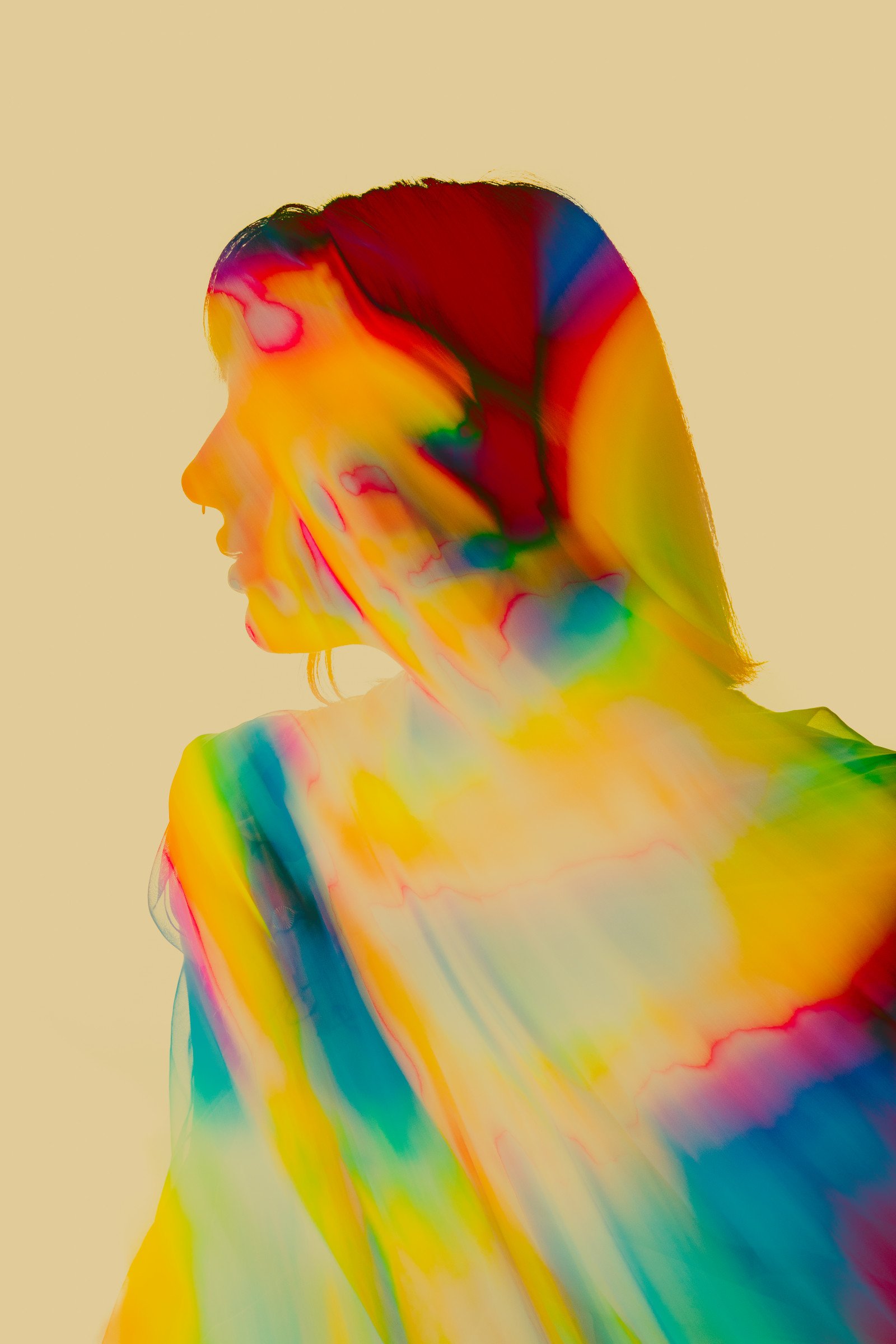
While synesthesia can be a beautiful, enriching way to experience the world, it also comes with a significant hidden cost for neurodivergent people: the sensory overload multiplier effect.
If you are autistic, you are likely already dealing with a nervous system that takes in too much data and struggles to filter out background noise. Now, imagine that every piece of sensory data you take in triggers a second piece of sensory data.
If you have chromesthesia (sound-to-color), a loud, crowded restaurant is not just an auditory nightmare. It is a visual assault. Every clattering plate, every overlapping conversation, every screeching chair leg is generating flashes of color and movement in your visual field.
If you have auditory-tactile synesthesia, that same restaurant is physically battering you. The sharp sounds are translating into physical taps, scrapes, and pressure on your skin.
This multiplier effect is why neurodivergent synesthetes often reach the threshold for sensory meltdown much faster than neurotypical people. Your brain is processing double the data for every single stimulus. It is running two programs simultaneously on hardware that is already running hot.
Understanding this is not just validating. It is practically useful. If you know you have chromesthesia and you are heading into a loud environment, you can prepare differently. You can use noise-canceling headphones not just to block sound, but to prevent the visual cascade that comes with it.
For a deeper look at how sensory overload works at the neurological level, read our full breakdown: Sensory Disorder in Adults: Your Nervous System Is Not Broken, It Is Just Loud.
How to Test Yourself for Synesthesia
Because synesthesia is entirely subjective and internal, many people live their whole lives without realizing they have it. They assume that when someone says a song is "dark and heavy," they literally mean it looks dark and feels heavy, because that is how they experience it.
If you are reading this list and wondering if your brain has crossed wires, you can run a quick self-assessment using the diagnostic criteria developed by Dr. Richard Cytowic, one of the world's leading synesthesia researchers .
For an experience to be considered true synesthesia, it must meet these five rules:
1. It is involuntary and automatic.
You do not have to think about it, and you cannot turn it off. If the letter "A" is red, it is always red, whether you want it to be or not. You do not conjure the color; it just happens.
2. It is spatially projected (usually).
While some synesthetes only see the colors in their "mind's eye" (associators), many actually see the color projected out into the physical space in front of them (projectors).
3. It is durable and generic.
The association never changes. If the number 4 was green when you were five years old, it will still be green when you are eighty. Furthermore, the secondary perception is usually simple and generic. You might see a flash of red or a geometric shape, but you will not see a complex, detailed painting of a landscape.
4. It is highly memorable.
Synesthetes often remember the secondary perception better than the primary one. You might forget a person's name, but you will remember that their name "tasted like copper" or "looked purple."
5. It is emotional.
The synesthetic experience often carries a strong emotional valence. If you see a word printed in the "wrong" color (for example, the word "APPLE" printed in blue ink when your brain knows it should be red), it can cause a visceral feeling of disgust or profound discomfort.
If your experiences check these five boxes, congratulations. You are part of the 4.4%.
The Creative Advantage
It is impossible to talk about synesthesia without talking about the profound creative advantage it provides.
When your brain naturally blends senses together, you have access to a vocabulary of human experience that most people cannot even fathom. You do not just hear music; you see its architecture. You do not just taste food; you feel its geometry.
This is why synesthesia is wildly overrepresented in the arts.
Musicians like Pharrell Williams, Lorde, and Billie Eilish use their chromesthesia to compose music, layering tracks until the "colors" look right in their minds. Painters like Vincent van Gogh and David Hockney translated their synesthetic visions directly onto canvas. Writers like Vladimir Nabokov used their grapheme-color synesthesia to craft prose that possessed a literal, visual rhythm.
For neurodivergent people, who are so often told that their brains are "disordered" or "deficient," synesthesia is a powerful counter-narrative. It is a reminder that a brain that develops differently is not broken. It is just capable of doing things that a typical brain cannot do.
It is an extreme ability, born from the exact same hyper-connectivity that makes the neurodivergent experience so challenging and so beautiful.
The Bottom Line
Synesthesia is not a disorder. It is not a hallucination. It is simply a different operating system for the human brain.
For neurodivergent people, synesthesia is often the invisible thread connecting our sensory overload, our intense empathy, and our unique problem-solving abilities. It is proof that our brains are not broken; they are just wired for a richer, more complex experience of the world.
If you read this list and thought, "Wait, doesn't everyone taste words?" or "Obviously the letter A is red," welcome to the club. Your brain has a secret playlist, and it is finally time to turn up the volume.
Good luck out there!
