Masking in Dating: Why Neurodivergent People Exhaust Themselves in Relationships
#TalkNerdyToMe® Staff Writer
TLDR: Masking in dating is the exhausting process where neurodivergent people suppress their natural traits to appear neurotypical. It drains your social battery, leads to autistic burnout, and creates a "camouflage disconnect" that harms mental health. Unmasking requires psychological safety, but it's the only way to build a sustainable, authentic relationship.
What is masking in dating? Masking in dating is the conscious or unconscious suppression of neurodivergent traits—such as stimming, sensory sensitivities, or executive dysfunction—to appear neurotypical to a romantic partner. While camouflaging can help autistic and ADHD individuals navigate early dates, it requires immense cognitive effort, rapidly drains the social battery, and often leads to severe autistic burnout and relationship disconnect over time.
You are sitting across the table at a dimly lit, painfully loud restaurant. Your date is talking about their recent trip to Cabo, and you are nodding at exactly the right intervals. You are maintaining the socially acceptable amount of eye contact—not too intense, not too avoidant. You are suppressing the urge to bounce your leg, you are ignoring the sensory assault of the clinking silverware, and you are mentally rehearsing your next response so you do not accidentally launch into a twenty-minute monologue about your special interest.
You are doing everything right. You are nailing this date. And you are absolutely, fundamentally exhausted.
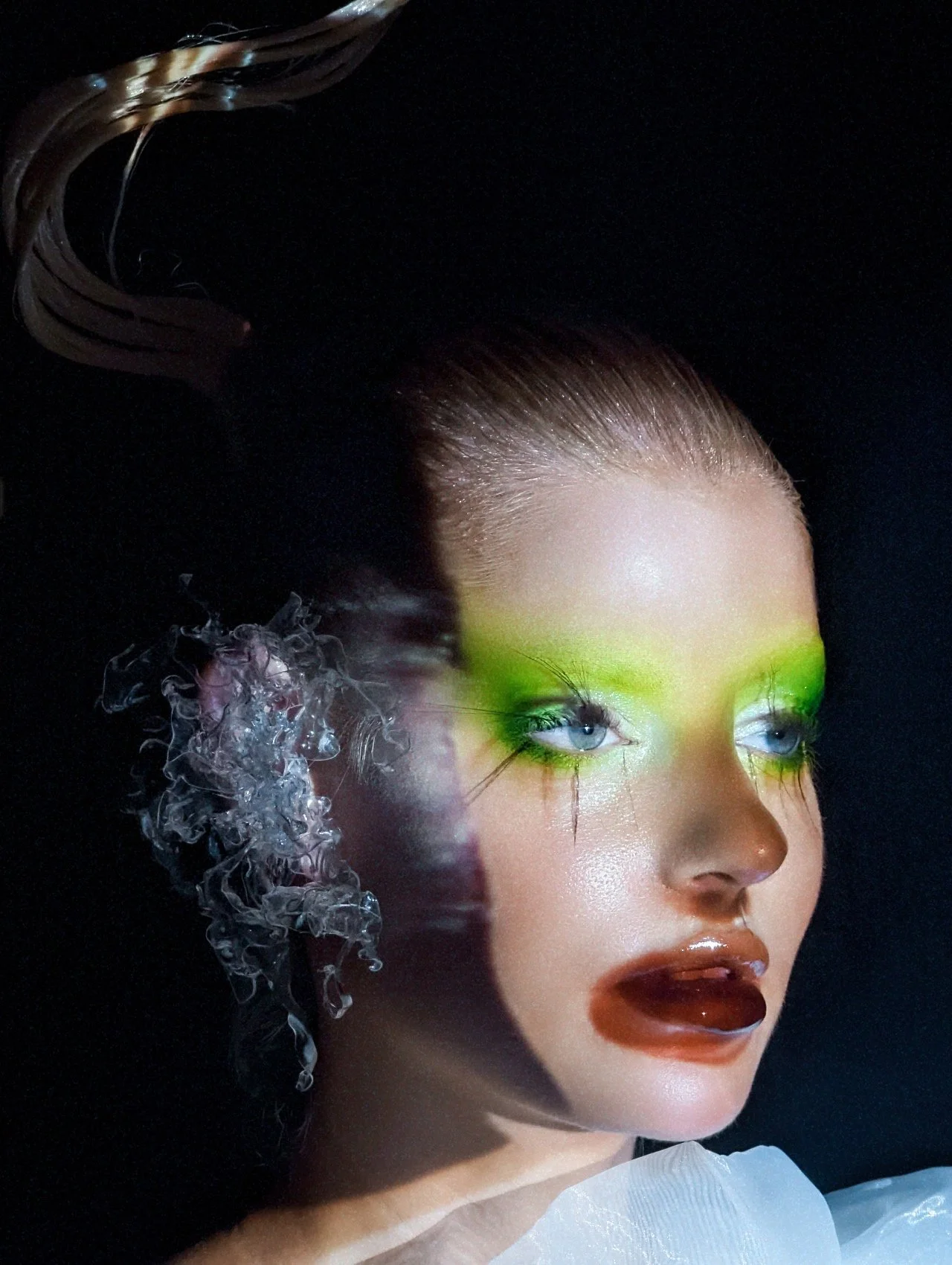
Welcome to masking in dating. If you are neurodivergent—whether you have autism, ADHD, or both—you likely know this performance intimately. It is the exhausting, invisible labor of camouflaging your natural neurology to fit into a neurotypical dating world. But while masking might get you through the appetizers, it comes with a massive physiological and psychological cost.
Let’s talk nerdy about the science of masking, why it drains your social battery, and how the pursuit of appearing "normal" might be the exact thing sabotaging your relationships.
The Science of the Social Chameleon
Masking, also known in clinical literature as camouflaging, is not just "faking it." It is a complex, high-level cognitive strategy used to navigate social situations that were not built for neurodivergent brains. Research published in the Journal of Autism and Developmental Disorders defines camouflaging as the behaviors used to hide aspects of oneself or to "pass" in everyday social interactions .
For autistic individuals, masking might look like forcing painful eye contact, suppressing stims (like hand-flapping or fidgeting), or manually calculating facial expressions. For those with ADHD, it often involves hiding hyperactivity, over-preparing to mask time blindness, or biting your tongue to stop yourself from impulsively interrupting.
In the context of dating, the stakes are incredibly high. First dates are already a minefield of social expectations, unspoken rules, and rapid-fire judgments. For a neurodivergent person, the pressure to perform neurotypicality is amplified. You are not just trying to see if you like the person; you are running a background program that constantly monitors your own behavior to ensure you do not seem "too much," "too intense," or "too weird."
This is not just a casual effort. A comprehensive study involving both autistic and non-autistic adults found that masking is often driven by stigma avoidance . You mask because society has taught you that your natural way of existing is unacceptable. For women and those assigned female at birth, the pressure is even heavier. Research indicates that autistic women are more likely to camouflage for "conventional" reasons, such as getting by in formal settings or relationships, often leading to late or missed diagnoses because they have become so adept at hiding their struggles .
The Energy Cost: Why You Crash After a Date
If you have ever come home from a seemingly successful date and immediately collapsed into bed, unable to speak or process information for the next twelve hours, you have experienced the masking crash.
Masking requires your brain to manually process social cues that neurotypical brains process automatically. You are essentially running your brain on manual transmission while everyone else is driving an automatic. This constant nervous system override requires immense energy.
When you are masking, you are often simultaneously managing sensory input. You are blocking out the background noise of the restaurant, the scratchy tag on your shirt, and the flickering overhead light, all while trying to decode whether your date's smirk means they are flirting or mocking you. (If you struggle with reading those cues, you are not alone—understanding the subconscious signs someone likes you is notoriously difficult when your brain is already overloaded).
This rapid depletion of your social battery is why masking is a primary driver of autistic burnout. Unlike typical exhaustion, autistic burnout is a state of profound physical, mental, and emotional depletion caused by the cumulative stress of navigating a neurotypical world. When you mask heavily in dating, you are accelerating your path to burnout. You might make it through the first few dates, but eventually, the energy required to maintain the facade becomes unsustainable.
The Disconnect Theory: When the Mask Becomes a Trap

Here is the cruel irony of masking in dating: the very mechanism you use to secure connection is often what prevents true intimacy.
In social psychology, Disconnect Theory suggests that individuals use context-specific information to decide how to act, rather than engaging with all contexts the same way . When you mask on a date but unmask alone, you create a "camouflage disconnect." You are splitting your identity.
Research shows that this disconnection is deeply detrimental to mental health. Keeping track of which parts of your identity are expressed in which environments causes identity fragmentation, stress, anxiety, and depression . When you mask heavily in a relationship, you are building a connection based on a fictional version of yourself.
This creates a psychological trap. If your partner falls in love with the masked version of you, you now have to maintain that mask to keep their love. The fear of rejection if you drop the mask becomes paralyzing. You might find yourself overthinking texting, analyzing every interaction, and experiencing severe texting anxiety because you are terrified that one "wrong" or "unmasked" move will ruin everything.
Furthermore, when the mask inevitably slips—because nobody can maintain that level of cognitive effort forever—your partner might feel confused or betrayed. They might wonder why you suddenly seem distant, why you are suddenly sensitive to loud noises, or why you need so much alone time. They might perceive your autistic burnout as a lack of interest in the relationship, leading to conflict that you do not have the energy to resolve.
The Gender Divide in Masking
While masking is a universal neurodivergent experience, the way it manifests—and the reasons behind it—often split sharply along gender lines. Research has consistently shown that autistic women, and those assigned female at birth, tend to mask more heavily and for different reasons than their male counterparts.
This discrepancy is deeply rooted in societal expectations. From a young age, girls are socialized to be accommodating, polite, and hyper-aware of the emotional states of others. When a neurodivergent girl misses a social cue or struggles with emotional regulation, she is often corrected more harshly than a boy displaying the same behavior. As a result, she learns to camouflage her neurodivergent traits to survive socially.
In the dating world, this gendered masking becomes even more pronounced. A study examining the costs of camouflaging found that autistic women are more likely to endorse "conventional" reasons for masking, such as getting by in formal settings or maintaining relationships . They are navigating a double bind: the stigma of being autistic, and the societal pressure of performing conventional womanhood.
For neurodivergent women dating men, masking often involves suppressing their own needs to manage their partner's comfort. They might hide their sensory overload to avoid seeming "high maintenance," or suppress their deep knowledge on a topic to avoid intimidating their date. This intense level of camouflaging is a primary reason why so many autistic women are misdiagnosed or diagnosed late in life. They have become so proficient at performing neurotypical womanhood that even medical professionals miss the underlying neurodivergence.
Conversely, neurodivergent men also mask, but their camouflaging might look different. They might rely heavily on pre-planned scripts or mimic the behavior of neurotypical peers to navigate the dating scene. However, because societal expectations for male social and emotional communication are generally lower, their masking might not require the same exhaustive level of emotional attunement expected of women.
Regardless of gender, the result is the same: a profound disconnection from the authentic self and a rapid depletion of the social battery.
The Intersection of Masking and Rejection Sensitive Dysphoria (RSD)
To fully grasp the terror of unmasking in dating, we have to talk about Rejection Sensitive Dysphoria (RSD). RSD is an extreme emotional sensitivity and pain triggered by the perception—real or imagined—that you have been rejected, criticized, or have failed to meet expectations. While not an official diagnosis in the DSM-5, RSD is a widely recognized and deeply felt experience, particularly among those with ADHD and autism.
When you combine masking with RSD, dating becomes an emotional minefield. You mask because your RSD tells you that your authentic, neurodivergent self is fundamentally unacceptable and will inevitably be rejected. The mask is your armor against the agonizing pain of perceived criticism.
Imagine you are on a date, and you accidentally let a special interest slip. You start talking passionately about the history of medieval architecture for ten minutes straight. Suddenly, you notice your date checking their watch. For a neurotypical person, this might be a minor embarrassment. For someone with RSD, it is a catastrophic emotional event. The nervous system registers the perceived boredom as a profound rejection.
To prevent this pain, the neurodivergent brain doubles down on masking. You become hyper-vigilant, constantly scanning your date's face for micro-expressions of disapproval. You over-analyze every text message, experiencing crippling texting anxiety as you try to decode whether their use of a period instead of an exclamation mark means they hate you.
This hyper-vigilance is exhausting. You are not just trying to connect with another person; you are actively trying to outrun the crushing weight of RSD. The tragedy is that this intense masking often creates the very distance you are trying to avoid. When you are so focused on performing perfectly to avoid rejection, you cannot be present in the relationship. You are managing a crisis, not building a connection.
The Physical Toll: When Masking Makes You Sick
We often talk about masking as a psychological burden, but the physical toll is equally devastating. Your brain and your body are not separate entities. When your brain is constantly running the high-level cognitive processes required to mask, your nervous system is trapped in a state of chronic stress.
This chronic stress has real, physiological consequences. Many neurodivergent individuals report experiencing severe physical symptoms after heavily masked social interactions, including migraines, gastrointestinal distress, muscle tension, and profound fatigue.
This physical toll is compounded for those who exist at the intersection of neurodivergence and chronic illness. There is a well-documented, though not fully understood, overlap between autism, ADHD, and conditions like hypermobility spectrum disorders (HSD), Ehlers-Danlos syndrome (EDS), and Postural Orthostatic Tachycardia Syndrome (POTS).
If you have POTS, your autonomic nervous system is already struggling to regulate basic functions like heart rate and blood pressure. When you add the intense neurological demand of masking on a date—processing complex social cues, suppressing stims, managing sensory input—you are pushing an already fragile system to its breaking point.
Masking in dating often means ignoring your body's distress signals. You might force yourself to sit upright in a rigid chair at a restaurant, ignoring the pooling blood in your legs and the rising dizziness, just to appear "normal." You might eat food that triggers your MCAS (Mast Cell Activation Syndrome) because you do not want to seem "difficult" by asking for modifications.
You are literally making yourself sick to make your date comfortable.
This is why unmasking is not just a matter of emotional authenticity; it is a matter of physical health. Learning to unmask means learning to listen to your body's signals and honoring your physical limits, even if it means disrupting the neurotypical script of a date.
The Myth of the "Bait and Switch"

One of the most common fears neurodivergent people have about unmasking in a relationship is the fear of the "bait and switch."
The narrative goes like this: You meet someone, and you mask heavily to win them over. You are attentive, you make great eye contact, you suppress your sensory needs, and you mirror their energy perfectly. They fall in love with this version of you. But as the relationship progresses and you become more comfortable, the mask inevitably begins to slip. You need more alone time. You start stimming more openly. You can no longer tolerate the loud restaurants you pretended to enjoy.
Your partner becomes confused and frustrated. They feel like you have changed, like you are no longer the person they started dating. They might accuse you of pulling away or not trying as hard. You feel like you have tricked them, and the guilt is overwhelming.
But here is the truth: you did not bait and switch them. You survived.
You used the tools you had to navigate a social landscape that is inherently hostile to your neurology. The masked version of you was never sustainable, and it was never the whole truth. The unmasked version of you—the one who needs quiet, who stims to regulate, who communicates differently—is the real you.
Navigating this transition requires immense grace from both partners. If you are the neurodivergent partner, it requires the courage to slowly introduce your authentic self and the patience to explain your operating system. If you are the neurotypical partner, it requires the willingness to learn a new language of love and connection, and the understanding that your partner's unmasking is a sign of deep trust, not a withdrawal of affection.
The goal of dating should never be to find someone who loves your mask. The goal is to find someone who makes you feel safe enough to take it off.
The Double Empathy Problem in Romance
To understand why masking feels so necessary, we have to look at the Double Empathy Problem. Traditionally, the medical model of autism suggested that autistic people lack empathy or social skills. However, modern research argues that communication breakdowns happen because autistic and neurotypical people have different, but equally valid, ways of communicating and experiencing the world.
When a neurodivergent person dates a neurotypical person, there is a cross-cultural communication barrier. You mask to bridge that gap. You learn their language because society has rarely asked them to learn yours.
For example, a neurodivergent person might show affection through "infodumping" (sharing extensive knowledge about a special interest) or "parallel play" (existing in the same room doing different activities without talking). A neurotypical partner might interpret infodumping as dominating the conversation, and parallel play as being ignored. To avoid this, the neurodivergent person masks: they suppress their natural love languages and force themselves to perform neurotypical romance, even if it feels unnatural and exhausting.
This dynamic is especially prevalent in the intersection of neurodivergence and chronic illness. If you are managing the trifecta of autism, ADHD, and hypermobility, or dealing with POTS and dysautonomia, your physical energy is already compromised. Masking on top of chronic illness is a recipe for total system collapse.
Masking in Dating: The Science of the Social Chameleon
What the research says about camouflaging, energy costs, and the path to authentic connection.
| Masking Behavior | Autism | ADHD | Energy Cost |
|---|---|---|---|
| Eye Contact | Forcing sustained eye contact when painful or overwhelming | Maintaining eye contact while brain is elsewhere | HIGH |
| Suppressing Stims | Stopping hand-flapping, rocking, or fidgeting | Sitting still, suppressing leg-bouncing or pen-clicking | HIGH |
| Sensory Management | Ignoring sensory overload from noise, light, texture | Filtering distracting sensory input to stay focused | HIGH |
| Conversation Scripts | Pre-planning responses to avoid awkward pauses | Rehearsing to prevent impulsive interruptions | MEDIUM |
| Emotional Mirroring | Manually calculating appropriate facial expressions | Suppressing emotional dysregulation or big reactions | HIGH |
| Interest Suppression | Hiding special interests to avoid seeming "too much" | Containing hyperfocus tangents mid-conversation | MEDIUM |
| Physical Needs | Ignoring MCAS triggers, sensory food issues, posture needs | Hiding time blindness, lateness, or executive dysfunction | HIGH |
| Post-Date Crash | Hours to days of recovery after masked social interaction | Dopamine crash + exhaustion after sustained performance | SEVERE |
| Step | Action | What It Looks Like | Why It Works |
|---|---|---|---|
| 1 | Acknowledge the Mask | Notice what you suppress during and after dates. Track your post-date energy crash. | You cannot remove a mask you do not know you are wearing. |
| 2 | Date on Your Terms | Propose low-sensory environments: quiet cafes, walks, museums, home cooking. | Reduces the sensory load so you have energy for actual connection. |
| 3 | Share Your Operating System | "I process better when I'm fidgeting." "Loud spaces drain me fast." | Gives your partner the user manual to your brain before misunderstandings happen. |
| 4 | Test for Safe Harbors | Let a small stim slip. Mention a sensory need. Watch how they respond. | Filters for partners who meet vulnerability with curiosity, not judgment. |
| 5 | Embrace the "Too Much" | Infodump about your special interest. Show your real communication style. | The right person will love your brain. The wrong person will self-select out. |
How to Safely Unmask in Relationships
Unmasking is not a switch you can simply flip. It is a slow, vulnerable, and often terrifying process of peeling back the layers you have built to survive. As relationship experts note, unmasking requires psychological safety . You cannot force yourself to unmask if your nervous system does not feel safe.
If you are ready to start showing up authentically in your dating life, here is how to begin the unmasking process:
1. Acknowledge Your Mask
You cannot take off a mask you do not know you are wearing. Start paying attention to your body during and after dates. What behaviors are you forcing? What natural impulses are you suppressing? Are you hiding your sensory disorder triggers? Recognizing the mask is the first step to dismantling it.
2. Date on Your Own Terms
Stop agreeing to dates that guarantee sensory overload. If loud bars make you want to crawl out of your skin, suggest a quiet coffee shop, a walk in the park, or a museum. Set the environment up for your success so you do not have to waste energy masking your sensory pain.
3. Communicate Your Operating System
You do not have to drop your medical history on a first date, but you can communicate your needs. "I have a hard time with loud noises, so I might seem a bit distracted in this restaurant," or "I process things better when I'm fidgeting, so if I'm playing with this coaster, it means I'm really listening to you." Giving your partner the "user manual" to your brain prevents misunderstandings.
4. Look for Safe Harbors
Pay attention to how your date responds to your micro-unmasking. If you let a stim slip, do they look at you weirdly, or do they not care? If you explain that you need a quiet environment, do they accommodate you, or do they push your boundaries? Unmasking requires a partner who meets your vulnerability with curiosity and kindness, not judgment.
5. Embrace the "Too Much"
You have likely spent your life being told you are too intense, too sensitive, or too weird. But the right partner will not be intimidated by your neurodivergence. They will love the way your brain works. They will find your special interests endearing, they will understand your need for quiet time, and they will not require you to perform neurotypicality to earn their affection.
The Freedom of Authentic Connection
Unmasking in dating is a profound act of self-love. It is the radical decision to stop performing and start existing. Yes, dropping the mask might mean you go on fewer second dates. It might mean you filter out people who are only compatible with the fictional, neurotypical version of you.
But the people who stay? They are staying for you.
When you stop spending all your energy managing your mask, you finally have the energy to actually enjoy the connection. You get to experience the profound relief of being fully seen, fully known, and fully loved—stims, sensory sensitivities, hyper-fixations, and all.
Your neurology is not a flaw to be hidden. Your brain is beautiful, complex, and entirely worthy of love exactly as it is. Stop exhausting yourself for people who want you to be someone else. Take off the mask. The right person will love the face underneath.
Your body isn't a symptom.
