Famous Synesthetes: How "Crossed Wires" Create Genius
#TalkNerdyToMe® Staff Writer
Synesthesia is a neurological phenomenon where experiencing one sense automatically triggers another. Famous people with synesthesia, including musicians like Billie Eilish and Lorde, writers like Vladimir Nabokov, and scientists like Richard Feynman, often credit their crossed sensory wires for their creative and intellectual breakthroughs.
Imagine trying to write a song, but instead of just hearing the chords, you see them. The bassline is a deep, textured navy blue. The snare drum flashes like a bright yellow strobe light. The melody wraps around the room in ribbons of emerald green. If the song sounds wrong, it is not just because it is out of tune. It is because the colors are clashing.
For most people, that sounds like the climax of a psychedelic movie. For someone with chromesthesia (sound-to-color synesthesia), it is just a Tuesday.
Synesthesia is a neurological trait where stimulating one sensory pathway involuntarily fires up a second one. You might taste the word "coffee" as metallic. You might see the number four as bright red. You might feel a physical sensation on your own shoulder when you see someone else get hugged. It is a fascinating, complex, and highly individualized way of perceiving the world.
And if you have it, you are in spectacular company.
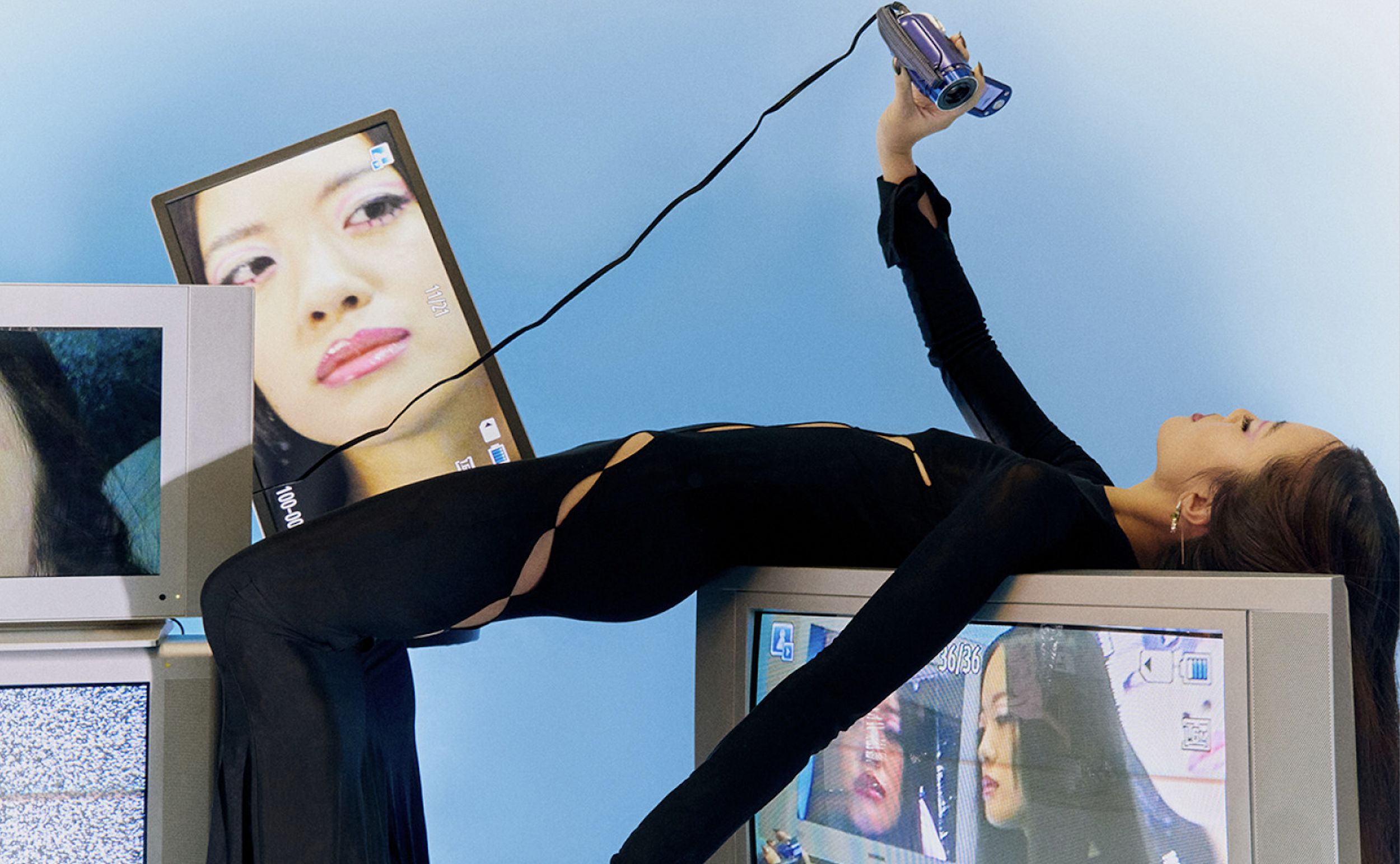
Some of history's most innovative artists, musicians, and scientists are famous people with synesthesia. They did not succeed in spite of their crossed sensory wires. They succeeded because of them. Research consistently shows that synesthetes score significantly higher on measures of creativity, visual-spatial ability, and artistic involvement .
This is where the science gets incredibly validating. Synesthesia is not a disorder. It is not a hallucination. It is a biological difference in how the brain routes information. And while we know there is a strong autism and synesthesia connection (autistic people are roughly three times more likely to have it), synesthesia is a creative superpower that spans the entire neurodivergent spectrum .
Let's look at how the world's most famous synesthetes use their multi-sensory brains to build things the rest of us could never imagine.
The Musicians Who See Sound
If you have ever wondered why certain artists produce music that feels incredibly textured, layered, and visually evocative, the answer might literally be in their neurology. Chromesthesia, where sound involuntarily evokes an experience of color, shape, and movement, is one of the 10 most common types of synesthesia. It is also heavily overrepresented in the music industry.
Billie Eilish and Finneas O'Connell
Billie Eilish does not just write songs. She builds sensory environments. And she has been incredibly open about how her synesthesia dictates every part of her creative process.
During an interview on The Tonight Show, Eilish explained that her entire artistic output is governed by her sensory crossovers. "All my videos for the most part have to do with synesthesia, all of my artwork, everything I do live, all the colors for each song, it's because those are the colors for those songs specifically," she explained .
When Eilish hears music, she experiences it as a combination of colors, shapes, and textures. The song "bad guy," for example, is yellow, red, and the number seven. Her brother and primary producer, Finneas O'Connell, is also a confirmed synesthete. This is not a coincidence. Synesthesia is highly heritable, meaning it frequently runs in families. Together, they use their shared sensory language to produce tracks that feel structurally different from standard pop music.
Lorde
New Zealand singer-songwriter Lorde also has chromesthesia, and she relies on it as a built-in quality control system. For Lorde, a song is not finished until the colors look right.
She has described the process of writing her hit song "Tennis Court" as a battle with ugly colors. "When we first started 'Tennis Court' we just had that pad playing the chords, and it was the worst textured tan colour, like really dated, and it made me feel sick," she recalled in an MTV interview. "And then we figured out that prechorus and I started the lyric, and the song changed to all these incredible greens overnight!"
This is a classic synesthetic experience. The perception is involuntary and consistent. Lorde cannot choose to make a bad chord progression look pretty. If the sound is wrong, the color is wrong.
Pharrell Williams
Pharrell Williams is responsible for some of the most infectious, universally beloved pop and hip-hop tracks of the last two decades. He also uses his sound-to-color synesthesia as a navigational tool in the studio.
Speaking to NPR's Morning Edition, Williams explained that his synesthesia is his primary method for understanding music. "It's the only way that I can identify what something sounds like. I know when something is in key because it either matches the same color or it doesn't. Or it feels different and it doesn't feel right" .
Williams has noted that he believes many musicians have synesthesia, even if they do not have a word for it. He views it as a standard part of the creative toolkit rather than a bizarre anomaly.
Duke Ellington
Long before modern pop stars were discussing their neurology on late-night television, jazz legend Duke Ellington was using his chromesthesia to compose some of the most sophisticated music of the 20th century.
Ellington did not just see general colors when he heard music. He saw specific colors tied to the specific musicians in his orchestra. According to his biographer Don George, Ellington once explained his process like this: "If Harry Carney is playing, D is dark blue burlap. If Johnny Hodges is playing, G becomes light blue satin" .
Notice the detail there. It was not just blue. It was blue burlap versus blue satin. Ellington was experiencing sound as both color and texture, and he used those sensory profiles to arrange his complex, multi-layered jazz compositions. His masterpiece "Mood Indigo" is widely considered a direct translation of his synesthetic experience into sound.
Olivier Messiaen
If you want to find the most thoroughly documented case of synesthesia in classical music, look to the 20th-century French composer Olivier Messiaen.
Messiaen had a profound, highly structured form of chromesthesia. He saw complex, shifting colors when he heard or read musical chords. He was so dedicated to his sensory experience that he would write specific color instructions into his musical scores, asking the performers to play in a way that would evoke a "greenish gold" or a "blue-orange" .
Messiaen's music is famously complex, utilizing modes of limited transposition that he designed specifically because they produced the most beautiful and vibrant colors in his mind. For Messiaen, composing was quite literally the act of painting with sound.
Famous Synesthetes: How Crossed Wires Create Genius
The musicians, writers, and scientists who use their multi-sensory brains to build things the rest of us cannot imagine.
| Artist | Synesthesia Type | How They Use It | Notable Quote |
|---|---|---|---|
| Billie Eilish | Multiple | Colors dictate all visuals, live shows, and artwork for each song. | "All the colors for each song, it's because those are the colors for those songs specifically." |
| Lorde | Chromesthesia | Uses color as quality control. A song is not finished until the colors look right. | "It was the worst textured tan colour... and then the song changed to all these incredible greens overnight!" |
| Pharrell Williams | Sound-to-Color | Primary method for identifying pitch and key in the studio. | "I know when something is in key because it either matches the same color or it doesn't." |
| Duke Ellington | Chromesthesia | Saw specific colors and textures for each musician in his orchestra. | "If Harry Carney is playing, D is dark blue burlap. If Johnny Hodges is playing, G becomes light blue satin." |
| Olivier Messiaen | Chromesthesia | Wrote color instructions into musical scores. Composed to produce specific visual effects. | Described harmonies as "greenish gold" or "blue-orange." |
| Person | Field | Synesthesia Type | How It Shaped Their Work |
|---|---|---|---|
| Vladimir Nabokov | Literature | Grapheme-Color | Saw each letter of the alphabet in a specific color. His wife and son also had synesthesia, creating a three-generation family case. |
| Richard Feynman | Physics (Nobel Laureate) | Grapheme-Color | Saw equations in full color. "When I see equations, I see the letters in colors." Essentially had syntax highlighting for the universe. |
| Daniel Tammet | Writing, Mathematics | Multiple + Autism | Numbers have color, shape, texture, and personality. Recited 22,514 digits of pi by navigating a sensory landscape. |
| David Hockney | Visual Art, Stage Design | Chromesthesia | Designed Metropolitan Opera stage sets by painting the exact colors the music produced in his mind. |
| Study | Key Finding | Year |
|---|---|---|
| Ward et al. | Synesthetes more likely to engage in art and creative pursuits; heightened ability to form meaningful associations. | 2008 |
| Lunke & Meier | Synesthetes outperformed controls on divergent thinking and visuo-spatial tasks. | 2018 |
| Domino | Synesthetes scored significantly higher on all four creativity measures tested. | 1989 |
| Baron-Cohen et al. | Synesthesia is roughly 3x more common in autistic people than in the general population. | 2013 |
| Discipline | Famous Synesthete | Achievement |
|---|---|---|
| Pop Music | Billie Eilish | Multiple Grammy Awards, youngest artist to win all four major categories |
| Jazz | Duke Ellington | Over 1,000 compositions, Presidential Medal of Freedom |
| Classical Music | Olivier Messiaen | Revolutionized 20th-century composition with synesthetic color-based modes |
| Literature | Vladimir Nabokov | Author of Lolita, Pale Fire; widely considered one of the greatest prose stylists in English |
| Physics | Richard Feynman | Nobel Prize in Physics, pioneered quantum electrodynamics |
| Mathematics | Daniel Tammet | European pi-recitation record, 11 languages, bestselling author |
The Writers and Scientists Who See Data
Synesthesia is not limited to musicians. One of the most common forms of the trait is grapheme-color synesthesia, where letters and numbers are inherently tied to specific colors. For writers, mathematicians, and scientists, this form of synesthesia provides a built-in organizational system for complex data.

Vladimir Nabokov
Vladimir Nabokov, the brilliant and controversial author of Lolita, had a highly specific form of grapheme-color synesthesia. He wrote extensively about his sensory experiences in his autobiography, Speak, Memory.
For Nabokov, the alphabet was a vibrant, meticulously color-coded palette. He described the letter 'a' as the color of weathered wood, 'b' as the shade of burnt sienna, and 'c' as a light blue. Interestingly, his synesthesia was phonetic as well as visual. He noted that the color of a letter could change depending on the language he was speaking, as the sound of the letter shifted .
Nabokov's case is also a famous example of synesthesia's genetic component. His wife, Véra, had synesthesia, as did their son, Dmitri. Dmitri's colors for specific letters were often a blend of his parents' colors—a literal genetic mixing of sensory palettes.
Richard Feynman
You do not win a Nobel Prize in Physics without the ability to hold massive amounts of complex information in your head. For Richard Feynman, grapheme-color synesthesia provided a distinct advantage in visualizing mathematics.
Feynman, one of the most influential physicists of the 20th century, saw equations in full color. In his book What Do You Care What Other People Think?, he wrote: "When I see equations, I see the letters in colors. I don't know why. As I'm talking, I see vague pictures of Bessel functions from Jahnke and Emde's book, with light-tan j's, slightly violet-bluish n's, and dark brown x's flying around" .
Imagine trying to solve a complex physics equation. Now imagine that instead of staring at a wall of identical black text, every variable has its own distinct color identity. Feynman's synesthesia essentially gave him syntax highlighting for the universe.
Daniel Tammet
Daniel Tammet is an autistic savant, a writer, and a polyglot who speaks 11 languages. He also holds the European record for reciting pi from memory to 22,514 digits. How does he do it? By walking through a landscape of colored shapes.
Tammet has a profound form of synesthesia where numbers possess color, shape, texture, and personality. In his experience, the number 11 is friendly, while the number 5 is loud. The number 289 is particularly ugly, while 333 is beautiful .
When Tammet recited pi for over five hours, he was not just remembering a string of abstract digits. He was navigating a vivid, three-dimensional sensory environment. His experience highlights how deeply synesthesia can intersect with neurodivergence. For Tammet, autism and synesthesia are not separate conditions; they are deeply intertwined aspects of how his brain processes reality.
The Science of Synesthesia and Creativity
Why are so many famous artists and innovators synesthetic? Is it just a coincidence, or does the trait actually enhance creativity?
The research strongly points to the latter. Multiple scientific studies have found that synesthetes score significantly higher on objective measures of creativity compared to the general population. A landmark 2008 study published in the British Journal of Psychology found that synesthetes were much more likely to spend time engaged in art and creative pursuits, and they demonstrated a heightened ability to form meaningful associations between seemingly unrelated concepts .
A later 2018 study in Frontiers in Psychology backed this up, finding that synesthetes outperformed control groups on tasks requiring divergent thinking and visuo-spatial ability .
Creativity, at its core, is the ability to connect two things that do not usually go together. If your brain is physically wired to connect the sound of a C-minor chord with the color emerald green, you are already operating with an expanded associative network. You have access to metaphors and sensory combinations that other people literally cannot perceive.
Why Your Neurodivergence Is Not a Deficit
When we talk about famous people with synesthesia, we are really talking about the power of atypical brains.
For decades, the medical and educational systems have treated neurodivergence as a list of deficits. If your brain processes sensory input differently, you are told you have a "processing disorder." If you feel the emotions and physical sensations of others too intensely, you are told you need to toughen up (a reality we explore deeply in our post on mirror-touch synesthesia).
But synesthesia flips that narrative on its head. Nobody looks at Billie Eilish's Grammy awards or Richard Feynman's Nobel Prize and calls their sensory processing a deficit. Their crossed wires are recognized as the exact mechanism that allowed them to see the world from an angle nobody else could access.
If you have synesthesia, or autism, or ADHD, or a nervous system that simply refuses to process the world in the standard, factory-default way, you are not broken. You are operating a highly specialized piece of biological hardware. Yes, it can be exhausting. Yes, it can lead to sensory disorder and sensory overload. A brain that sees sound and tastes color requires a lot of energy to run, which is why autistic burnout is such a prevalent issue in the neurodivergent community.
But that same brain is also capable of profound beauty. It can find patterns in chaos. It can turn a jazz composition into a tapestry of blue burlap and satin. It can turn a physics equation into a rainbow.
Your brain has a secret playlist. You are allowed to turn up the volume.
The Visual Artists Who Paint Sound
While musicians translate their synesthetic colors into sound, visual artists do the exact opposite. They take the internal sensory landscape and project it onto a canvas for the rest of the world to see.
David Hockney
David Hockney, one of the most influential British artists of the 20th century, has chromesthesia. But unlike musicians who use it to write songs, Hockney uses his sound-to-color synesthesia to design physical spaces.
When Hockney was commissioned to design the stage sets for the Metropolitan Opera's production of L'Enfant et les sortilèges, he did not just rely on standard theatrical design principles. He listened to the music and painted the exact colors and shapes that the score produced in his mind. The resulting set design was not just an interpretation of the music; it was a literal, visual transcription of his neurological experience.
For Hockney, the music dictated the lighting, the backdrops, and the spatial arrangement of the stage. His synesthesia allowed the audience to temporarily step inside his brain and "see" the opera exactly the way he did.
Wassily Kandinsky (The Great Debate)
No conversation about famous synesthetes is complete without mentioning the pioneer of abstract art, Wassily Kandinsky. However, his inclusion comes with a massive asterisk.
Kandinsky is frequently cited in pop psychology articles as the ultimate synesthetic artist. He wrote extensively about the relationship between color and sound, claiming that colors were like the keys of a piano that could cause the soul to vibrate. He even named his paintings after musical terms, like "Composition" and "Improvisation."
But did he actually have synesthesia? Modern neuroscientists and art historians are heavily divided. Some argue that his writings perfectly describe chromesthesia. Others point out that Kandinsky was deeply involved in the Theosophy movement, which placed a heavy philosophical emphasis on the spiritual connection between different art forms. It is entirely possible that Kandinsky's "synesthesia" was a deliberate, intellectual metaphor rather than an involuntary neurological reflex.
Whether he had it or not, Kandinsky's work proves how compelling the synesthetic experience is. He spent his entire career trying to artificially recreate the exact sensory crossover that people like Lorde and Duke Ellington experience automatically.
Why Synesthesia Feels Like a Secret
If synesthesia is such a powerful creative tool, why do so many people go decades without realizing they have it?
The answer lies in the factory-default assumption. When you are born with a brain that automatically colors the alphabet or assigns a personality to the number seven, you have no reason to assume that everyone else is not experiencing the exact same thing. It is your normal.
Many famous synesthetes report a specific "lightbulb moment" in their lives—usually in their teens or twenties—when they casually mention the color of a Tuesday or the texture of a C-minor chord in conversation, only to be met with blank stares from their friends. That is the moment they realize their brain has a feature that was not included in the standard operating system.
This is a profoundly common experience in the neurodivergent community. Whether it is synesthesia, autism, or ADHD, you spend your life assuming your internal reality matches the external world, until the day you realize the math does not add up. The sudden realization that you have been operating on a different sensory frequency can be jarring, but it is also the first step toward understanding how your specific neurological hardware actually works.
If you are reading this and thinking, "Wait, doesn't everyone think the letter A is red?", we highly recommend reading our post on what synesthesia actually feels like to see how your experiences line up with the rest of the community.
The Evolutionary Advantage of Crossed Wires
From an evolutionary standpoint, synesthesia is a fascinating puzzle. If the brain is designed to be efficient, why would it spend precious metabolic energy cross-wiring the auditory and visual cortices?
Some researchers believe that synesthesia is actually the default human state at birth. The "neonatal synesthesia" hypothesis suggests that all infants are born with highly interconnected sensory pathways. As we grow and our brains prune unnecessary neural connections to become more efficient, those sensory pathways separate. In synesthetes, the theory goes, that pruning process is incomplete, leaving the cross-connections intact.
This lack of neural pruning is also a leading theory in autism research, which perfectly explains why the two conditions co-occur so frequently. An autistic brain is often a hyper-connected brain. It retains more neural pathways, which can lead to intense sensory sensitivity, profound pattern recognition, and, very often, synesthesia.
Evolutionarily speaking, a hyper-connected brain is a high-risk, high-reward system. It is more susceptible to overwhelm and burnout, but it is also capable of the kind of divergent, associative thinking that drives human innovation. We need brains that specialize in efficiency and routine, but we also desperately need brains that can see the color of a physics equation or the texture of a jazz chord.
The famous synesthetes on this list did not just make pretty art. They expanded the boundaries of human expression. They proved that there is no single "correct" way to perceive reality, and that sometimes, the most profound breakthroughs happen when the wires get crossed.

References
[4] PSU Passion Blog. (2021 ). Famous Artists with Synesthesia.
[5] Linton Music. (n.d. ). Harmonizing Colors and Sounds: Famous Musicians with Synesthesia.
[6] The Diapason. (n.d. ). "Seeing" Olivier Messiaen's Music.
[7] Nabokov, V. (1966 ). Speak, Memory: An Autobiography Revisited. Vintage International.
[8] Feynman, R. P. (1988). What Do You Care What Other People Think? W.W. Norton.
[9] Brain & Life. (n.d.). Coming-of-Age Tale Describes Living with Synesthesia and Asperger's.