Synesthesia Pronunciation: How to Say It and What It Actually Means
#TalkNerdyToMe® Staff Writer
TLDR: Wondering how to say synesthesia? The correct synesthesia pronunciation is "sin-ess-THEE-zhuh" in American English. It comes from Greek roots meaning "union of the senses" and describes a neurological condition where stimulation of one sense automatically triggers an experience in another, like seeing colors when hearing music.
Let's talk about a word that looks like a spelling bee nightmare and sounds like a superpower. You have probably seen it in articles about Billie Eilish or heard it mentioned in neurodiversity circles. You might have even wondered if you have it yourself. But before diving into the fascinating neuroscience of crossed wires in the brain, we need to address the most common hurdle. How exactly do you say synesthesia out loud without stumbling over all those vowels?
The confusion makes sense. Medical terminology often feels like a mouthful of marbles, and this particular word has enough syllables to make anyone second-guess themselves. But once you break it down phonetically and understand where the word comes from, the synesthesia pronunciation becomes entirely intuitive.
This guide will break down exactly how to say synesthesia, explore the Greek roots that give the word its meaning, and dive deep into the science of what it actually means to taste words, see music, or feel colors.

Synesthesia Pronunciation: The Phonetic Breakdown
If you are looking for the quick answer on synesthesia how to say it correctly, here is the standard American English pronunciation broken down into four simple syllables: sin-ess-THEE-zhuh.
Let's look at each syllable individually to master the flow:
1.sin: Sounds exactly like the English word "sin."
2.ess: Sounds like the letter "S."
3.THEE: This is the stressed syllable. It rhymes with "see" and uses a soft "th" sound, like in the word "think" (not the hard "th" in "there").
4.zhuh: This final syllable uses a soft, buzzing "zh" sound, similar to the "s" in "measure" or "vision," followed by a soft "uh" sound (a schwa).
When you put it all together with the emphasis on the third syllable, you get sin-ess-THEE-zhuh .
The British Variation: Synaesthesia
If you are reading research papers or articles from the United Kingdom, you will likely encounter a different spelling: synaesthesia. The addition of the "a" is a hallmark of British English medical terminology derived from Greek.
The British pronunciation shifts slightly to accommodate this spelling. In the UK, it is typically pronounced sin-ess-THEE-zee-uh . The final syllable breaks into two distinct sounds ("zee-uh") rather than the blended "zhuh" used in North America. Both the spelling and the pronunciation are entirely correct within their respective regional dialects.
Common Mispronunciations to Avoid
When people first encounter the word in print, their brains often try to apply standard English phonetic rules that do not quite fit Greek derivatives. Here are the most frequent mispronunciations:
•"sin-es-THAY-see-uh": People often want to turn the "the" into an "A" sound.
•"sy-nes-THEE-sia": Pronouncing the first syllable with a long "I" sound (like "sigh") is incorrect.
•"sin-the-see-zhuh": This happens when the brain skips over the "es" syllable entirely, likely confusing it with the word "synthesis."
The Etymology: Where Does the Word Come From?
To truly understand a concept, it helps to look at its linguistic DNA. The word synesthesia is a perfect example of a medical term that tells you exactly what it means if you know how to decode its roots.
The term was first recorded in English around 1891, constructed from New Latin using ancient Greek building blocks . It is composed of two distinct Greek roots:
•Syn: Meaning "together," "jointly," or "union." You see this same prefix in words like synergy (working together), synchronize (moving together), and synthesis (putting things together) .
•Aesthesis: Meaning "sensation" or "perception." This is the same root found in the word anesthesia, which literally translates to "without sensation" .
When you combine these roots, the literal translation of synesthesia is "union of the senses" or "joined perception" . It is an incredibly elegant and accurate description of the neurological reality. Instead of sensory information traveling down parallel, isolated tracks in the brain, the tracks merge. The senses unite.
The Neuroscience: What Is Synesthesia?
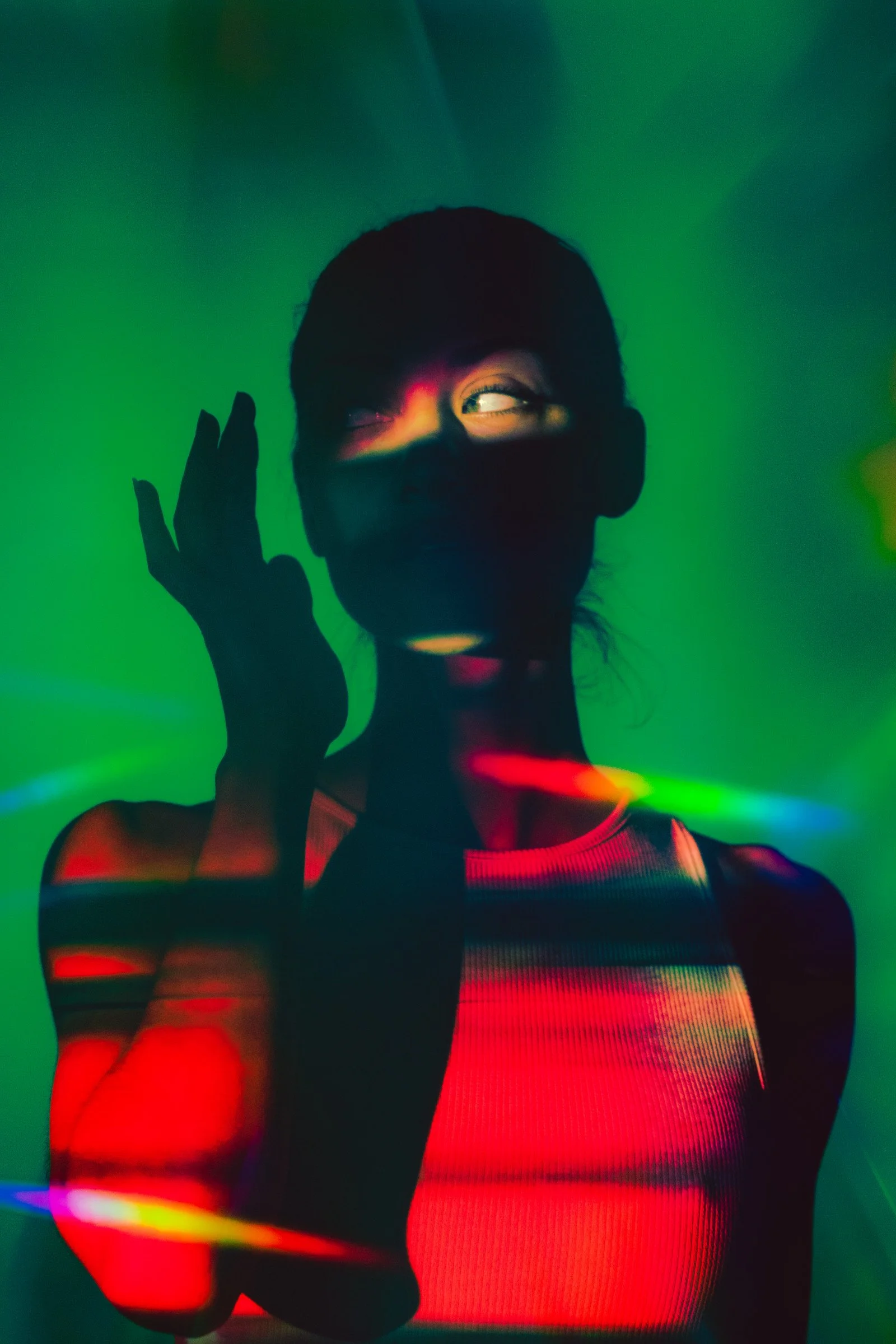
Now that we have mastered the synesthesia pronunciation and etymology, we can explore the actual phenomenon. Synesthesia is a neurological condition in which the stimulation of one sensory or cognitive pathway automatically and involuntarily leads to a secondary experience in another sensory or cognitive pathway .
In a neurotypical brain, sensory processing is highly compartmentalized. When you hear a dog bark, the auditory cortex processes the sound. When you look at an apple, the visual cortex processes the color and shape. These sensory streams remain relatively distinct until they are integrated higher up in the brain's processing hierarchy.
In a synesthetic brain, however, there is a literal cross-wiring. When a synesthete hears a musical note, their auditory cortex lights up as expected, but their visual cortex for color processing might simultaneously fire . The sound does not just trigger a memory of a color; it triggers an actual, involuntary perceptual experience of color.
The Cross-Activation Theory
Neuroscientists have spent decades trying to understand exactly how this sensory blending occurs. The leading explanation is the Cross-Activation Theory, heavily researched by neuroscientists like V.S. Ramachandran and Edward Hubbard .
According to this theory, synesthesia results from an excess of neural connections between adjacent brain regions. In the case of grapheme-color synesthesia (where letters and numbers trigger colors), the brain region responsible for processing the visual shape of letters is located directly next to the brain region responsible for processing color (the V4 area). In a synesthetic brain, there is a hyper-connectivity or "cross-talk" between these two adjacent areas .
When the brain processes the shape of the letter "A," the neural activation spills over into the color-processing region, causing the individual to simultaneously perceive the color red. This is not an active imagination or a learned association. It is a biological, hardwired reality. Functional MRI (fMRI) scans have repeatedly demonstrated that when synesthetes report seeing colors in response to sound or letters, their visual color centers are actively firing .
How Common Is Synesthesia?
For a long time, the scientific community believed synesthesia was incredibly rare, with estimates suggesting it affected only 1 in 25,000 people. However, as awareness has grown and testing methods have improved, those numbers have shifted dramatically.
Current research indicates that approximately 4% of the global population experiences some form of synesthesia . Some broader studies, including research funded by the European Union, suggest that up to 4.4% of people might have fully fledged synesthetic experiences .
This means synesthesia is not a bizarre anomaly. It is a relatively common neurological variation. If you are in a room with 25 people, statistical probability suggests that at least one person in that room is a synesthete.
The Genetics of Sensory Blending
Synesthesia is strongly hereditary. If you have it, there is a high probability that someone else in your biological family has it too, though they might experience a completely different type . A mother might taste words, while her son might see music as colors. The genetic trait seems to dictate the hyper-connectivity in the brain, but not the specific sensory pathways that get crossed.
Research has also consistently shown a higher prevalence of synesthesia in women compared to men, leading some geneticists to hypothesize that the trait might be linked to the X chromosome, though this is still an area of active study .
The 80+ Types of Synesthesia
When discussing synesthesia, most people immediately think of seeing colors when listening to music. While this is a famous variant, researchers have documented over 80 different types of synesthesia. Any two senses (or cognitive concepts like time and numbers) can theoretically be linked.
Here are the most common and fascinating types:
Grapheme-Color Synesthesia
This is widely considered the most common form, affecting an estimated 68% of all synesthetes . In grapheme-color synesthesia, individual letters of the alphabet and numbers are inherently associated with specific colors. For example, the letter "A" might always be cherry red, while the number "4" might be a deep navy blue. These associations are highly idiosyncratic (every synesthete has their own color alphabet) but remarkably consistent over a lifetime.
Chromesthesia (Sound-to-Color)
This is the type most frequently depicted in media. Individuals with chromesthesia experience visual colors, shapes, and movements in response to auditory stimuli. A specific chord played on a piano might produce a burst of vibrant yellow in their visual field, while a dog barking might look like a jagged gray shape.
Lexical-Gustatory Synesthesia
This is a rare and highly specific form where spoken or written words trigger distinct tastes and textures in the mouth. Hearing the word "basketball" might flood the synesthete's mouth with the taste of metallic copper, or reading the word "society" might taste exactly like stale potato chips.
Mirror-Touch Synesthesia
This profound variation links visual perception to tactile sensation. When a mirror-touch synesthete watches another person being touched, they physically feel a corresponding sensation on their own body. If they see someone get tapped on the left shoulder, they feel a tap on their own left shoulder. This type is strongly correlated with heightened levels of empathy.
Spatial-Sequence Synesthesia
Also known as spatial-temporal synesthesia, this form involves perceiving numerical sequences, months of the year, or days of the week as occupying specific physical locations in space. A person might see the months of the year arranged in an asymmetrical hula-hoop floating around their body, with December always positioned directly above their left shoulder.
Ordinal-Linguistic Personification
In this variation, ordered sequences like numbers, days, or letters are imbued with distinct, complex personalities and genders. For instance, the number 7 might be perceived as a grumpy, middle-aged man who dislikes the number 8, while the letter "T" might be a generous, maternal figure.
Famous Synesthetes: The Creative Advantage
There is a long-standing cultural association between synesthesia and artistic genius. While having synesthesia does not automatically make someone a brilliant artist, the ability to draw from multiple sensory inputs simultaneously provides a unique creative vocabulary. Many of history's most celebrated creators have spoken openly about their synesthetic experiences.
The music industry is particularly rich with chromesthetes (those who see sound as color). Pop icon Billie Eilish has been incredibly vocal about her multiple forms of synesthesia. For Eilish, every song she writes has a specific color, shape, and temperature. She has explained that her hit song "Bad Guy" is yellow, red, and the number seven .
Producer and musician Pharrell Williams relies heavily on his chromesthesia to create music. He has stated that he cannot imagine creating without the visual feedback of his synesthesia, describing his process as painting with sound . Other prominent musicians with confirmed synesthesia include Lorde, Kanye West, Frank Ocean, and Billy Joel .
But the phenomenon extends far beyond modern pop music. The brilliant inventor Nikola Tesla reportedly experienced intense visual flashes of light and color associated with specific words and ideas . The celebrated author Vladimir Nabokov wrote extensively about his grapheme-color synesthesia in his autobiography, noting that his alphabet was a vibrant spectrum of highly specific hues.
The Neurodivergent Connection
In recent years, the conversation around synesthesia has shifted from treating it as an isolated neurological quirk to understanding it within the broader framework of neurodiversity.
Neurodiversity is the concept that neurological differences (like Autism, ADHD, Dyslexia, and Dyspraxia) are natural variations of the human genome rather than deficits to be cured. Synesthesia fits perfectly into this paradigm. It is a different operating system for the brain, one that processes environmental input in a non-standard way.
Recent research has begun exploring the overlap between synesthesia and other neurodivergent profiles. A 2025 study highlighted that synesthesia appears to be associated with a wider range of neurodevelopmental conditions, rather than existing in isolation .
The connection between autism and synesthesia is particularly compelling. While they are completely separate neurological profiles, they co-occur at higher than average rates. Both conditions involve atypical sensory processing and differences in neural connectivity. Some researchers suggest that the hyper-connectivity seen in the autistic brain (which can lead to sensory overload) might share developmental mechanisms with the cross-wiring seen in the synesthetic brain .
For many neurodivergent individuals, discovering the synesthesia pronunciation and definition is a moment of profound validation. It provides a scientific vocabulary for an experience they have had their entire lives, proving that their unique way of perceiving the world is real, documented, and shared by millions of others.
How to Know if You Have Synesthesia
Because synesthetes are born with these cross-sensory experiences, they often assume everyone else perceives the world exactly the same way. It is incredibly common for a synesthete to reach adulthood before casually mentioning that "Tuesdays are obviously yellow" or "that song tastes like copper," only to be met with confused stares from their friends.
If you suspect you might be part of that 4% of the population, there are a few key criteria that define genuine synesthesia:
1.It is involuntary and automatic. You do not have to think about what color the letter "A" is. The color appears instantly and effortlessly the moment you see or think of the letter.
2.It is consistent over time. If the number 4 is navy blue today, it was navy blue when you were five years old, and it will be navy blue when you are eighty. This is the gold standard for testing. When researchers test synesthetes on their color-letter pairings and retest them years later without warning, their answers remain over 90% consistent .
3.It is highly specific. A synesthete does not just see "blue." They see a very specific shade of cobalt blue with a slightly metallic sheen.
4.It is memorable. The secondary sensation often helps synesthetes remember things. They might forget a person's name, but they remember that the name tasted like strawberries or looked bright green.
If you want to formally test your experiences, the Synesthesia Battery Test is widely considered the most scientifically validated online assessment tool. It measures the consistency of your sensory pairings against the statistical baselines required for a formal identification .
Debunking Common Synesthesia Myths
Despite increased scientific understanding and media representation, several persistent myths about synesthesia continue to circulate. It is time to clear the air.
Myth 1: Synesthesia is a mental illness or disorder.
Fact: Synesthesia is a neurological trait and a perceptual variation. It is not listed in the DSM-5 (Diagnostic and Statistical Manual of Mental Disorders) because it does not inherently cause distress or impairment. In fact, many synesthetes view it as an enhancement to their daily lives .
Myth 2: Synesthetes are hallucinating or imagining things.
Fact: Brain imaging (fMRI and PET scans) proves that synesthesia is a genuine physiological event. When a chromesthete hears music, the visual cortex of their brain physically activates. They are not using their imagination; they are experiencing a biological reality .
Myth 3: You can learn to be a synesthete.
Fact: While memory training can teach you to associate colors with letters, this is not true synesthesia. Learned associations require cognitive effort and do not produce the involuntary, automatic sensory experience characteristic of a cross-wired brain. True synesthesia is developmental and neurological .
Myth 4: It is extremely rare.
Fact: As established earlier, affecting approximately 4% of the population makes it more common than having green eyes or red hair .
The Beauty of a Blended Brain
Mastering the synesthesia pronunciation is just the first step in understanding one of the most beautiful variations of the human brain. Saying "sin-ess-THEE-zhuh" allows you to engage in conversations about neurodiversity, sensory processing, and the incredible elasticity of human perception.
For those who live with it, synesthesia is not a parlor trick. It is the fundamental lens through which they experience reality. It makes reading a vibrant visual experience, turns listening to the radio into a private light show, and transforms the mundane act of eating into a multi-sensory symphony.
The next time you listen to a Billie Eilish track or look at a painting by a synesthetic artist, remember that you are getting a rare glimpse into a brain where the boundaries between the senses have dissolved. It is a reminder that reality is entirely subjective, constructed by the unique wiring of our individual nervous systems. And that is a beautifully nerdy thing to think about.
FAQ:
Q: How do you pronounce synesthesia?
A: In American English, the correct synesthesia pronunciation is "sin-ess-THEE-zhuh." It is broken down into four syllables. The emphasis is on the third syllable, which sounds like "thee" with a soft "th." The British spelling, synaesthesia, is pronounced "sin-ess-THEE-zee-uh."
Q: What is the origin of the word synesthesia?
A: The word synesthesia comes from two Greek roots. The prefix "syn" means "together" or "union," and "aesthesis" means "sensation" or "perception." Together, the literal translation is a "union of the senses."
Q: Is synesthesia a mental illness?
A: No, synesthesia is not a mental illness or a disorder. It is a naturally occurring neurological trait and a perceptual variation where stimulation of one sense automatically triggers an experience in another sense. It affects approximately 4% of the population.
Medical Disclaimer: The information provided in this article is for educational and informational purposes only and is not intended as medical or psychological advice. Synesthesia is a recognized neurological trait, not a disorder. However, if you experience sudden, new-onset sensory changes or hallucinations, please consult a qualified healthcare professional or neurologist, as acquired sensory changes can sometimes indicate underlying medical conditions.

References
[1] Merriam-Webster. (2026). Synesthesia Definition & Meaning. Merriam-Webster Dictionary.
[3] Internet Encyclopedia of Philosophy. (n.d. ). Synesthesia.
[5] Neckar, M. (2014). Neuroscience of synesthesia and cross-modal associations. PubMed.
[9] European Commission. (2015 ). Do we all have synaesthesia? Horizon Magazine.
[10] Popdust. (2020 ). 15 Iconic Musicians With Synesthesia.
[11] Disabled World. (n.d. ). Famous People Who Have or Had Synesthesia.
[14] Eagleman, D. M., et al. (n.d. ). The Synesthesia Battery.
[15] Percify. (2026 ). How to Define Synesthesia: 5 Misconceptions Debunked.