Smirk Meaning: What It Really Means in Body Language (And Why Neurodivergent People Often Misread It)
#TalkNerdyToMe® Staff Writer
TLDR: What does a smirk mean? A smirk is an asymmetrical facial expression where only one side of the mouth turns upward. In body language, a smirk typically conveys smugness, superiority, sarcasm, or hidden knowledge. Unlike a genuine smile, which signals joy and engages the eyes, a smirk is often a conscious or subconscious display of dominance or contempt.
If you are neurodivergent, reading facial expressions can sometimes feel like trying to decode a Wi-Fi password written in ancient Greek.
You are scanning the face, looking for the data points you were taught to look for:
Corners of mouth up = happy. Eyebrows down = angry.
But then someone hits you with a smirk.

It is half a smile. It doesn't reach the eyes. It feels… weird. Are they flirting with you? Are they making fun of you? Do they know something you don't?
For autistic and ADHD brains, the smirk is one of the most notoriously difficult facial expressions to process accurately. It lives in the gray area of human emotion, heavily dependent on context, tone, and the micro-expressions happening in the rest of the face.
Let’s break down the actual science of the smirk, what it means when someone aims one at you, and why our neurodivergent brains are practically hardwired to misinterpret it.
WHAT IS A SMIRK? (THE ANATOMY OF THE EXPRESSION)
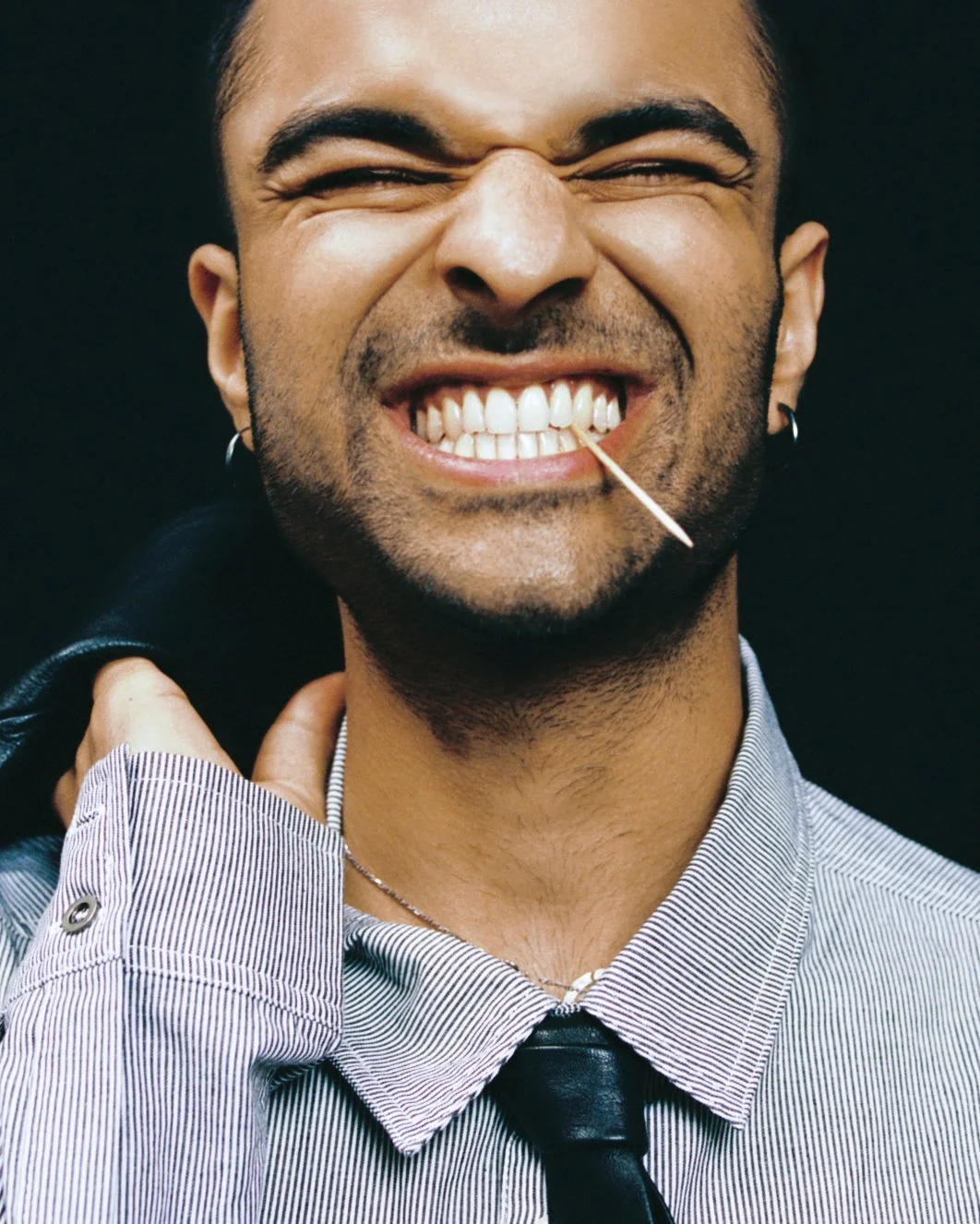
To understand the smirk meaning, we have to look at the facial muscles.
A smirk is defined by its asymmetry. When you smile, the zygomatic major muscles on both sides of your face contract, pulling both corners of your mouth upward .
When you smirk, only one side pulls up.
According to Dr. Paul Ekman, the pioneer of facial expression science, this asymmetry is the universal marker for contempt or disdain . It is the physical manifestation of feeling superior to someone else, or feeling like you are in on a joke that the other person doesn't understand.
But here is where it gets complicated: not all smirks are malicious. While the baseline definition of a smirk leans negative (smugness, arrogance, condescension), humans have adapted the smirk to mean a dozen different things depending on the context.
SMIRK VS. SMILE: WHAT IS THE DIFFERENCE?
The difference between a smirk and a smile comes down to two things: symmetry and the eyes.
The Smile (The Duchenne Smile)
A genuine smile—known in psychology as a Duchenne smile—is symmetrical. Both corners of the mouth go up. More importantly, a real smile engages the orbicularis oculi muscle, which circles the eyes . This is what causes the skin around the eyes to crinkle (crow's feet). You cannot easily fake a Duchenne smile. It is an involuntary neurological response to genuine joy or amusement.
The Smirk
A smirk is asymmetrical. One side of the mouth goes up, while the other stays flat or even pulls down slightly. Crucially, a smirk almost never engages the eyes. The eyes remain flat, calculating, or narrowed.
If you are ever confused about whether someone is smiling at you or smirking at you, stop looking at their mouth and look at their eyes. If the eyes aren't crinkling, it is not a smile.
WHAT DOES IT MEAN WHEN SOMEONE SMIRKS AT YOU?
When someone smirks at you, they are communicating one of four things. You have to use context clues to figure out which one it is:
1. The "I Know Something You Don't" Smirk
This is the classic smirk. It happens when someone possesses hidden knowledge. If you are arguing a point and the other person just smirks at you, they are silently communicating that they believe you are wrong, and they think it is amusing that you don't realize it yet.
2. The Sarcastic Smirk
This smirk is paired with a dry comment or an eye roll. It is a way of showing that they find a situation ridiculous. In this context, the smirk isn't necessarily directed at you as an insult; it is an invitation for you to join them in mocking the situation.
3. The Flirty Smirk
Yes, smirking can be a sign of attraction. A playful smirk is often used in flirting to create a sense of challenge or banter. It says, "I find you interesting, but I'm not going to make this easy for you."
4. The Embarrassed Smirk
Sometimes, people smirk when they are caught off guard or embarrassed. It is a defense mechanism. By smirking, they are trying to project an aura of "I totally meant to do that" or "I don't actually care," even when their nervous system is panicking.
SMIRK MEANING FROM A GUY
When trying to decode a smirk meaning from a guy, context is everything.
If a guy smirks at you from across the room at a party, it is often an attempt to project confidence and mystery. Many men are socialized to believe that a full, beaming smile makes them look too eager or vulnerable. A smirk allows them to show interest while maintaining a shield of cool detachment.
If he smirks while teasing you or engaging in banter, it is almost certainly a flirting mechanism. He is testing the waters to see if you can match his energy.
However, if you are in a professional setting or a serious disagreement and a guy smirks at you, it is a dominance display. It is a nonverbal way of dismissing your authority or your argument without having to say a word.
SMIRK MEANING FROM A GIRL
The smirk meaning from a girl often carries a slightly different social weight.
Because women are generally socialized to smile constantly to appear "pleasant" and "approachable," a woman choosing to smirk instead of smile is a deliberate break from social expectations.
If a girl smirks at you, it often means she is feeling playfully rebellious or mischievous. Like the guy's smirk, it can be a highly effective flirting tool—a way of signaling interest while maintaining the upper hand in the dynamic.
It can also be a sign of shared solidarity. If a woman smirks at you while someone else is talking, she is initiating a secret alliance. She is saying, "Are you hearing this nonsense too?"
WHY NEURODIVERGENT PEOPLE OFTEN MISREAD A SMIRK
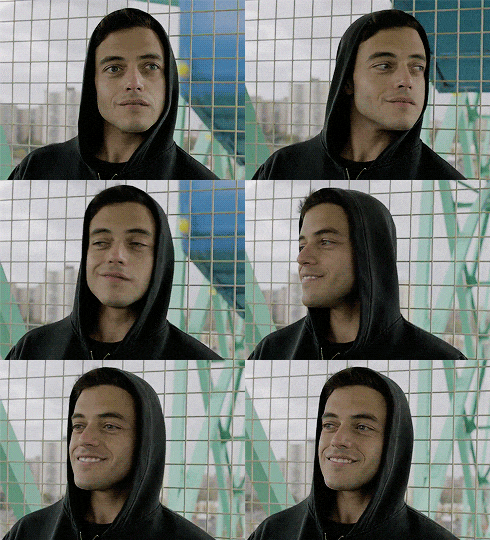
Here is where we get to the Talk Nerdy To Me® core of the issue. Why is this specific facial expression so incredibly difficult for autistic and ADHD folks to process?
It comes down to how our brains process facial data.
Research shows that neurotypical brains process faces holistically—they take in the mouth, the eyes, the eyebrows, and the micro-muscle movements all at once, instantly synthesizing them into an emotional read .
Autistic brains, however, tend to process faces by focusing on individual features, often prioritizing the mouth over the eyes .
If you are only looking at the mouth, a smirk looks an awful lot like a smile. The corner is going up, right? That means happy!
But because the smirk's true meaning is hidden in the lack of eye engagement and the asymmetry of the cheeks, a feature-by-feature processing style misses the crucial context.
Furthermore, neurodivergent people often struggle with "alexithymia"—difficulty identifying and describing emotions . When someone hits us with a complex, layered emotion like "smug condescension masked as amusement" (which is what a smirk is), our processing speed lags. We might recognize that the expression is negative, but we can't quite put our finger on why, leading to that familiar feeling of social anxiety and confusion.
(Side note: This is why we often prefer texting. Emojis do not smirk. The 😏 emoji is universally understood. Human faces are a mess.)
THE SUBCONSCIOUS SMIRK: WHEN PEOPLE DON'T KNOW THEY ARE DOING IT
Not all smirks are deliberate. Enter the subconscious smirk.
Sometimes, a person's face will briefly flash a smirk before returning to a neutral expression. In the world of body language, this is called a "micro-expression."
Micro-expressions last for less than half a second and reveal a person's true, concealed emotion . If you are telling a story and the listener flashes a subconscious smirk, their brain just leaked a tiny drop of contempt or superiority before their conscious mind could stop it.
They might not even know they did it. But if you catch it, you have just been given a glimpse into what they actually think of you.
HOW TO RESPOND TO A SMIRK
THE "RESTING SMIRK FACE" PHENOMENON
We have all heard of Resting Bitch Face (RBF), but there is a lesser-known, equally problematic cousin: Resting Smirk Face.
Some people naturally have an asymmetrical resting facial posture. Due to genetics, muscle tension, or even mild nerve damage, one corner of their mouth naturally sits slightly higher than the other. When their face is completely relaxed, they look like they are perpetually judging you.
If you have Resting Smirk Face, you probably spend a lot of your life wondering why people think you are arrogant or unapproachable before you have even spoken a word.
This is especially brutal for neurodivergent individuals who already struggle with masking. If your natural, unmasked resting face reads as "smug superiority" to neurotypical observers, you are constantly starting social interactions at a deficit. You have to actively manually engage your facial muscles just to look neutral.
If you encounter someone who seems to be smirking at inappropriate times—like during a sad story or a boring meeting—take a second to look at their baseline expression. It might not be a smirk at all. It might just be their face.
THE EVOLUTIONARY PURPOSE OF THE SMIRK
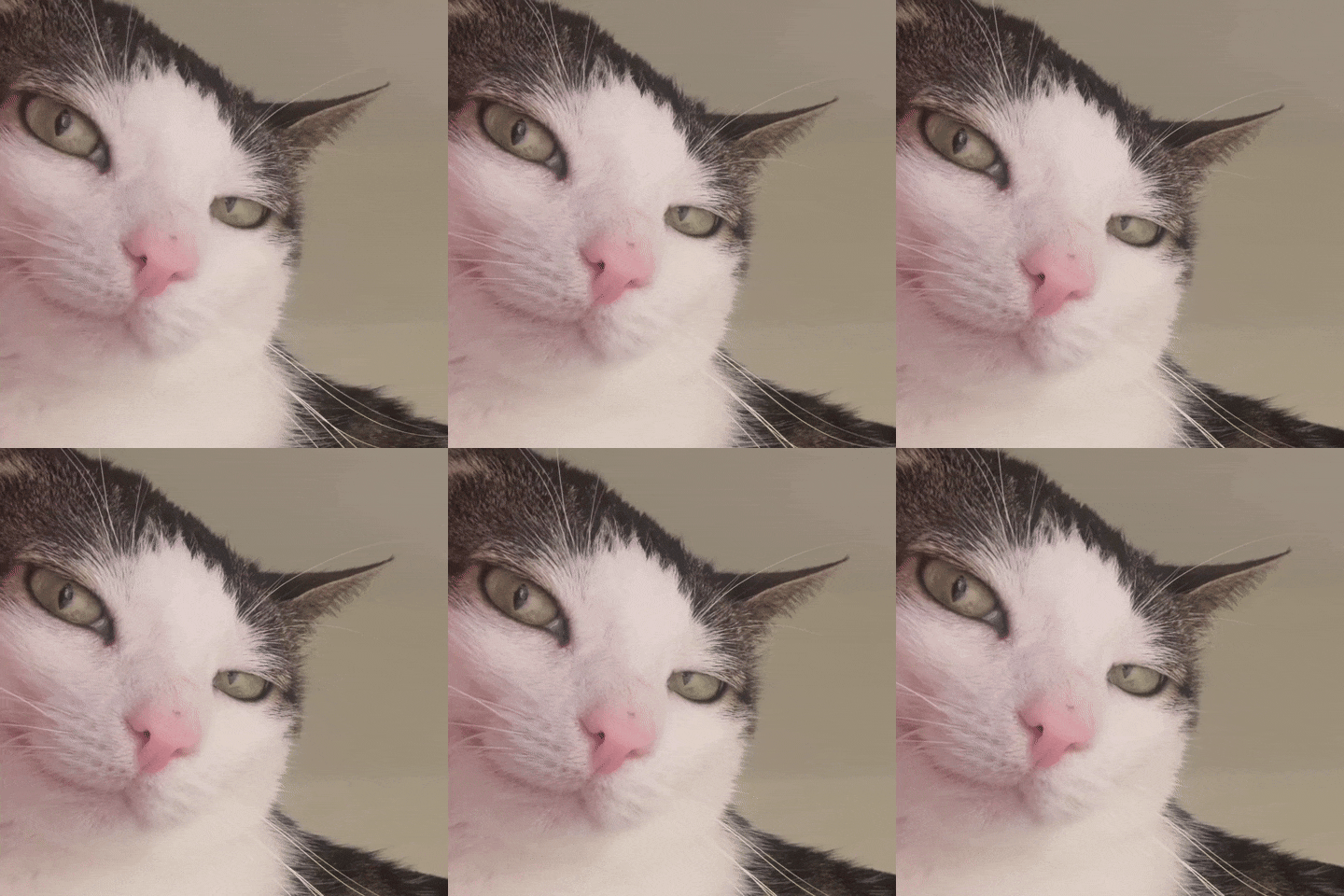
Why do humans smirk in the first place? If a genuine smile is designed to build social bonds and show that we are not a threat, what evolutionary purpose does a half-smile serve?
Evolutionary psychologists believe the smirk evolved as a non-violent dominance display.
In the animal kingdom, primates bare their teeth to show submission or fear (the evolutionary root of the human smile). But a smirk is different. By only engaging half the face, the smirker is signaling that they are relaxed. They are not afraid. They are so unbothered by the current situation that they don't even need to use full facial symmetry to respond to it.
It is the facial equivalent of leaning back in your chair and crossing your arms behind your head. It takes up psychological space.
This is why a smirk from a boss or a rival feels so infuriating. Your primal brain recognizes it for exactly what it is: a claim of higher status.
HOW TO FAKE A SMIRK (AND WHY YOU MIGHT WANT TO)
Masking is a survival skill for many autistic and ADHD adults. We learn to manually operate our faces to produce the expressions that neurotypical society expects from us.
Usually, we are practicing how to look interested, how to look empathetic, or how to produce a convincing Duchenne smile.
But learning how to deploy a deliberate smirk can actually be a powerful tool in your masking arsenal.
Because a smirk signals confidence and unbothered amusement, it is the perfect defensive shield when you are feeling overwhelmed or socially cornered. If someone makes a passive-aggressive comment and your neurodivergent brain needs a few seconds to process what they actually meant, a smirk buys you time.
Instead of looking confused or panicked, you just raise one corner of your mouth, keep your eyes steady, and say nothing.
To the other person, it looks like you completely understood their insult and found it pathetic. In reality, your brain is just buffering.
How to execute the defensive smirk:
1.Keep your eyes completely neutral. Do not widen them.
2.Pull only one corner of your mouth up slightly.
3.Do not show teeth.
4.Hold eye contact for two seconds longer than is comfortable.
5.Look away slowly.
It is a masterclass in nonverbal boundary setting.
THE DANGERS OF MISREADING THE SMIRK IN DATING
We touched on the flirty smirk earlier, but it is worth diving deeper into how this specific expression derails neurodivergent dating.
When neurotypical people flirt, they rely heavily on ambiguity. They want to show interest, but they also want plausible deniability in case they get rejected. The smirk is the ultimate ambiguous expression.
If a guy smirks at a girl at a bar, he is saying, "I'm interested, but I'm also cool and mysterious."
If an autistic person sees that same smirk, their brain might translate it as, "That man is mocking my outfit."
This misinterpretation pipeline is why so many neurodivergent people accidentally reject people who are actively hitting on them. We read the asymmetry of the smirk as a threat rather than an invitation.
If you are navigating the dating world, you have to look for the "cluster." A smirk on its own is ambiguous. But a smirk clustered with prolonged eye contact, physical proximity, and preening behaviors (like adjusting their hair or clothes) is almost always a sign of attraction.
THE MEDIA'S OBSESSION WITH THE SMIRK
If you want to see the smirk in its natural habitat, just turn on a movie.
Hollywood relies on the smirk as a shorthand for specific character archetypes. The "Bad Boy with a Heart of Gold" always smirks. The "Brilliant but Arrogant Detective" (think Sherlock or House) always smirks. The "Villain Who Is One Step Ahead" always smirks.
We are culturally conditioned by media to associate the smirk with intelligence, competence, and dangerous charm.
This creates a weird feedback loop in real life. People who want to be perceived as intelligent or charming will subconsciously adopt the smirk as their default expression, mimicking the characters they see on screen.
So the next time someone smirks at you, remember: they might not actually feel superior. They might just be doing a really bad impression of a movie character.
THE NEUROLOGY OF FACIAL MIMICRY
There is one more piece of science that explains why smirks feel so uncomfortable to be on the receiving end of: facial mimicry.
When we talk to someone, our brains subconsciously trigger our own facial muscles to mirror their expressions . If they smile, we feel the urge to smile. If they frown, our brow furrows. This is how human empathy works on a neurological level.
But a smirk breaks the mimicry circuit.
Because a smirk is asymmetrical and emotionally ambiguous, our brains don't know how to mirror it. Do we smile back? Do we frown? The neurological confusion creates a tiny spike of cognitive dissonance and discomfort.
For neurodivergent people, who often already have delayed or atypical facial mimicry responses, this dissonance is amplified. The smirk literally disrupts our ability to co-regulate with the other person.
It is not just in your head. The smirk is biologically designed to keep you off balance.
So, you have successfully identified that someone is smirking at you. Now what?
If you are neurodivergent, your instinct might be to panic, assume you did something wrong, or immediately start masking harder.
Don't.
The best way to disarm a negative smirk is to call it out neutrally. You don't have to be aggressive. Just state the data.
"You're smirking. What's funny?"
"That looked like a smirk. Do you disagree with what I just said?"
By explicitly naming the nonverbal cue, you force the person to translate their passive-aggressive body language into actual words. You are taking the interaction out of the murky waters of neurotypical subtext and forcing it into the clear light of direct communication.
And if it was a flirty smirk? Calling it out works just as well. It shows you are paying attention.
CONCLUSION
The smirk is the Swiss Army knife of facial expressions. It can mean superiority, sarcasm, flirting, or embarrassment.
For those of us with neurodivergent brains, decoding the smirk meaning will probably always require a little extra manual processing power. We have to consciously remind ourselves to check the eyes, check the symmetry, and check the context.
But once you understand the mechanics behind it, a smirk stops being a confusing social trap and becomes just another piece of data.
And the next time someone tries to use a condescending smirk to make you feel small? You can just look right back at them, perfectly neutral, and know exactly what game they are trying to play.
Your face, your rules.
