Do you face “away” from the shower? You might be Neurodivergent
#TalkNerdyToMe® Staff Writer
If you’ve spent any time on TikTok or Instagram Reels lately, you’ve likely stumbled across a highly specific, yet wildly viral debate: When you take a shower, which way do you face? For the neurotypical population, the answer might seem arbitrary. But for the neurodivergent community, a simple video claiming that showering with your back to the showerhead is a "neurodivergent trait" sparked a massive wave of realization.
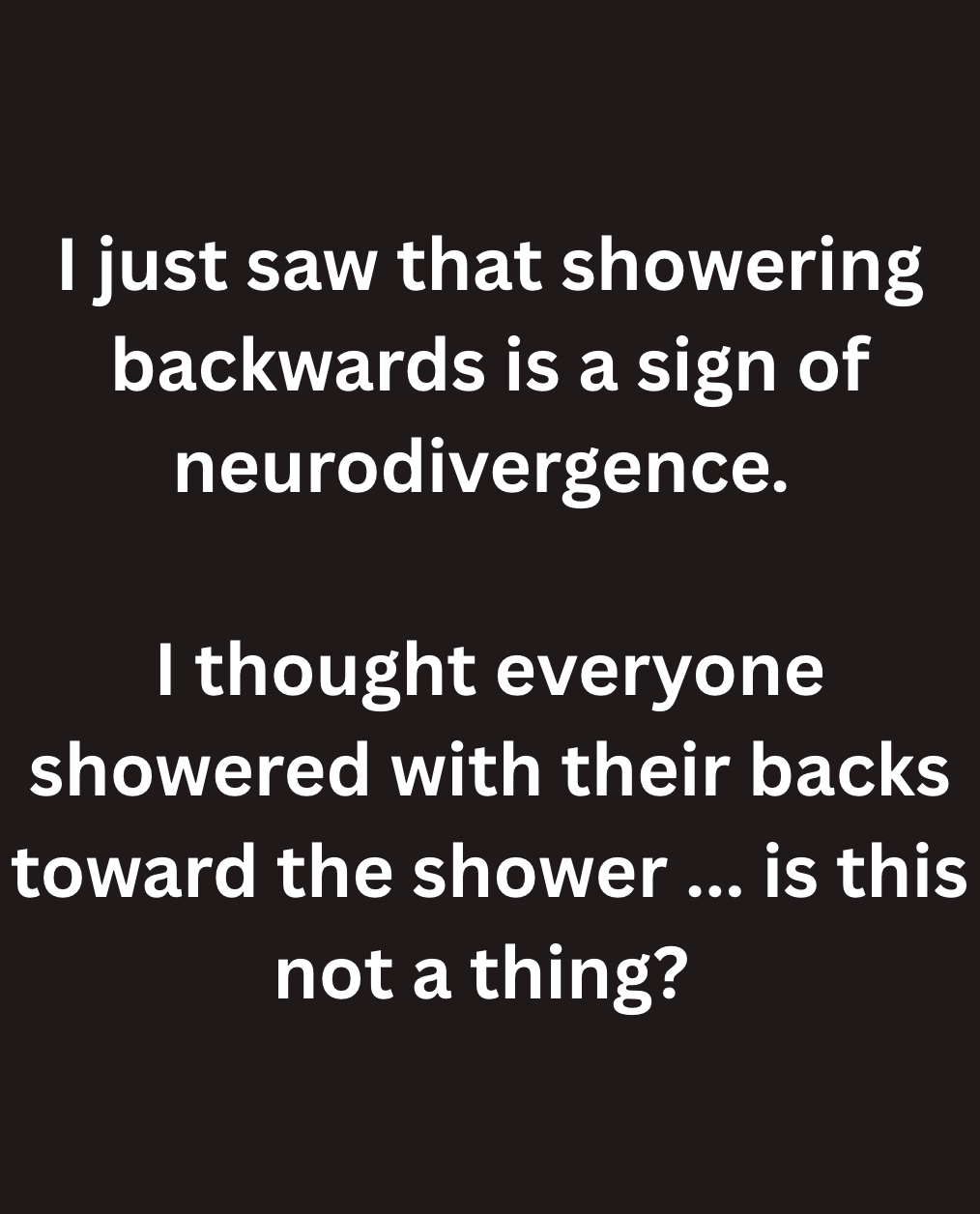
The comments sections were flooded with people saying, "Wait, I thought everyone did that!" or "I just stand there rotating like a rotisserie chicken." What started as a quirky internet meme quickly evolved into a profound discussion about sensory processing, nervous system regulation, and the hidden exhausting reality of daily hygiene.
For many individuals with ADHD, Autism, or Sensory Processing Disorder (SPD), a shower is not just a simple step in a morning routine. It is a complex, multi-sensory event that requires significant executive function and emotional regulation. While the "back-to-the-showerhead" stance might seem like a funny internet trend, it is deeply rooted in the science of how neurodivergent brains interact with their environment. Let’s talk nerdy about why the neurodivergent showering experience is so unique, and why turning our backs to the water is actually a brilliant coping mechanism.
The Viral Meme: Are You a "Rotisserie Chicken" or a "Back-Facer"?
The conversation reached a fever pitch when a Canadian TikTok creator responded to a claim that neurodivergent people apparently shower backwards . She argued that individuals with neurodivergence are actually "showering the right way." The internet immediately divided into factions.
Some users were baffled, assuming that facing the showerhead was just a "fake movie thing" used for dramatic effect in films. Others admitted to the "rotisserie chicken" method—constantly turning to distribute the heat. But a massive contingent of AuDHD (Autistic and ADHD) individuals chimed in to confirm that they strictly face away from the water stream.
Why do these highly specific memes resonate so deeply? For decades, many neurodivergent people have masked their behaviors, assuming their intense discomfort with certain daily tasks was a personal failing or a sign of laziness. When a meme highlights a shared experience—like the intense need to shield one's face from a shower stream—it provides instant validation. It shifts the narrative from "What is wrong with me?" to "Oh, my brain is just wired differently, and my body is trying to protect me."
The Science of Sensory Processing and the Shower
To understand the meme, we have to break down the anatomy of a shower. To a neurotypical brain, a shower is just warm water and soap. To a neurodivergent brain, a shower is a chaotic symphony of sensory input.
First, there is the auditory assault: the loud drone of the bathroom exhaust fan echoing off tile walls, combined with the unpredictable sound of rushing water. Then, there are the tactile sensations: the slippery texture of soap, the heavy feeling of wet hair clinging to the neck, and the scratchy feeling of a towel. Finally, there are the intense temperature shifts involved in transitioning from a warm, dry room, to a wet environment, and back to the cold air again.
But the most crucial factor in the "back-to-the-showerhead" debate involves the face. The human face is one of the most sensitive parts of the body, packed with nerve endings. Specifically, the trigeminal nerve, which provides sensation to the face, is highly reactive. For individuals with sensory processing differences, direct water hitting the face can feel physically painful or intensely overstimulating . If the water pressure is high or the temperature is scalding, a blast of water to the face can send a dysregulated nervous system straight into a "fight or flight" response.
Furthermore, neurodivergent individuals often experience differences in interoception (the ability to perceive internal body signals like hunger or temperature) and proprioception (the awareness of the body in space). When you combine poor body awareness with the overwhelming, unpredictable sensation of water hitting multiple parts of the body simultaneously, the brain can easily become overloaded.
Why We Turn Our Backs: Nervous System Regulation
So, why is the back-to-the-showerhead stance the preferred method for so many neurodivergent folks? It all comes down to nervous system regulation.
When you face away from the showerhead, you are actively reducing the amount of sensory input your brain has to process. You are protecting your highly sensitive face, eyes, and trigeminal nerve from the chaotic stimulation of the water stream. By allowing the water to hit your back and shoulders instead, the sensation becomes predictable and uniform.
For many, the steady stream of warm water on the back acts similarly to a weighted blanket. It provides deep pressure therapy, which stimulates the parasympathetic nervous system—the part of the body responsible for "rest and digest" functions. Instead of fighting off sensory overload, the body can finally relax. Facing away feels calming and controlled, reducing sensory input and providing a sense of safety .
Interestingly, medical professionals actually agree with the neurodivergent community on this one. Dr. Vincent, a medical expert who weighed in on the viral debate, noted that facing directly into hot water for prolonged periods can dry out facial skin, worsen conditions like rosacea, and irritate the eyes . Dermal therapist Isabella Loneragan echoed this, stating that looking away from the shower is a "practical skincare habit" that preserves natural oils on the delicate skin of the face and décolletage . So, not only is the back-facing stance sensory-friendly, but it is also scientifically better for your skin.
The "ADHD Shower": Executive Dysfunction and Task Initiation
While sensory overload explains how we shower, we also have to address why it is so hard to get into the shower in the first place. If you have ADHD, you are likely intimately familiar with the "ADHD shower" paralysis.
For ADHD brains, the struggle is rarely about hygiene; it is about executive dysfunction and dopamine deficiency. ADHD brains struggle with task switching—the ability to stop doing one thing and start doing another. Transitioning from a high-dopamine activity (like scrolling on your phone or hyper-focusing on a hobby) to a low-dopamine, high-effort task like showering feels physically impossible .
Furthermore, showering is not one task. It is a "Wall of Awful" consisting of dozens of micro-steps:
1.Realize you need a shower.
2.Find a clean towel.
3.Walk to the cold bathroom.
4.Take off comfortable clothes.
5.Turn on the water and wait for it to warm up.
6.Step into the wet environment.
7.Wash hair (which involves scrubbing, rinsing, and sensory ick).
8.Wash body.
9.Turn off the water and immediately freeze.
10.Dry off with a sensory-offensive towel.
11.Put on new clothes while your skin is still slightly damp (the ultimate sensory nightmare).
When an ADHD brain looks at that list of steps, it becomes completely overwhelmed by the executive function required to plan and execute them. Because the reward (being clean) is delayed and not inherently dopamine-producing, the brain simply refuses to initiate the task .
Sensory-Friendly Shower Hacks for Neurodivergent Brains

If showering feels like climbing Mount Everest, you are not lazy, and you are not alone. The key to surviving the neurodivergent showering experience is to remove the friction and accommodate your specific sensory needs. Here are some nerdy, science-backed hacks to make hygiene more accessible:
1. Lower the Sensory Load
If the bathroom fan is too loud, don't turn it on (just leave the door cracked to prevent mold). If the bright overhead lights are too intense, shower in the dark, use a dim nightlight, or buy waterproof LED candles. Reducing visual and auditory input leaves more "spoons" (energy) for dealing with the water.
2. Hack Your Dopamine
If the shower is boring, make it a high-dopamine environment. Bring a waterproof Bluetooth speaker and blast your favorite hyper-fixation playlist. Listen to an engaging podcast. Some people even buy waterproof phone pouches so they can watch YouTube or TikTok while they wash. Pair the low-reward task of showering with a high-reward activity.
3. Ease the Temperature Transitions
The transition from dry-to-wet and wet-to-dry is often the hardest part. Invest in a small, safe bathroom space heater to warm up the room before you undress . Buy a towel warmer, or throw your towel in the dryer for a few minutes before you get in. Keep a plush, sensory-friendly bathrobe right outside the shower door so you can immediately wrap yourself in warmth.
4. Change the Hardware
If water pressure is an issue, replace your standard showerhead with a detachable, handheld wand. This allows you to control exactly where the water goes, completely avoiding your face and head if necessary. It also makes rinsing off much faster and more efficient.
5. Embrace the "Micro-Task" and Alternatives
Remove the moral weight from showering. You do not have to do the "Everything Shower" every time. If you only have the energy to stand under the warm water for three minutes, that counts. If you can't wash your hair, use dry shampoo . On days when the executive dysfunction is too high, embrace the "bird bath"—use baby wipes, micellar water wipes, or a damp washcloth to clean the important areas. Hygiene is morally neutral; do what you need to do to survive the day.
Bonus: The Psychology of Internet Validation
Before we wrap up, it's worth exploring why this specific meme took off with such ferocity. The neurodivergent community on platforms like TikTok and Instagram has created a unique subculture of shared experiences. For decades, many of these individuals grew up feeling isolated, assuming their intense discomfort with certain daily tasks was a personal failing, a sign of laziness, or just being "too sensitive."
When a creator posts a video saying, "Hey, does anyone else do this highly specific thing?" and thousands of people respond with an enthusiastic "Yes!", it provides a profound sense of relief. It shifts the narrative from "What is wrong with me?" to "Oh, my brain is just wired differently, and my body is trying to protect me." This phenomenon is often referred to as "community diagnosis" or peer validation. While it doesn't replace professional medical advice, it serves as a crucial first step for many adults discovering their neurodivergence later in life .
The "back-to-the-showerhead" meme is a perfect example of this. It took a private, often shameful struggle—the difficulty of maintaining personal hygiene—and turned it into a point of connection. It allowed people to laugh at their shared "rotisserie chicken" habits while simultaneously acknowledging the very real sensory and executive functioning challenges they face every day. This kind of digital community building is vital for mental health, providing a safe space to share hacks, vent frustrations, and realize that you are not alone in your sensory struggles.
Conclusion
The viral "back-to-the-showerhead" meme is a perfect example of how internet culture can accidentally highlight profound neurological truths. What neurotypical people view as a funny quirk is actually a highly evolved coping mechanism used by neurodivergent individuals to regulate their nervous systems, protect their sensory boundaries, and navigate a world that is often too loud, too bright, and too overwhelming.
Whether you are a rotisserie chicken, a back-facer, or someone who relies on dry shampoo to get through the week, your hygiene routine is valid. By understanding the science behind our sensory processing and executive functioning, we can stop shaming ourselves for struggling with "basic" tasks and start building routines that actually work for our unique brains.

References
[1] Experts Reveal Truth Behind Shower Facing Direction Debate. Daily Dot.
[2] ADHD and Showering. CHADD.
[3] Navigating Showers as a Neurodivergent Individual. Taking Care Counselling.
[4] TikTok user sparks viral debate over which way you should face in the shower. New York Post.
[5] ADHD, Autism, and Showering - Why Is It So Hard to Shower for Us? Helen Olivier.